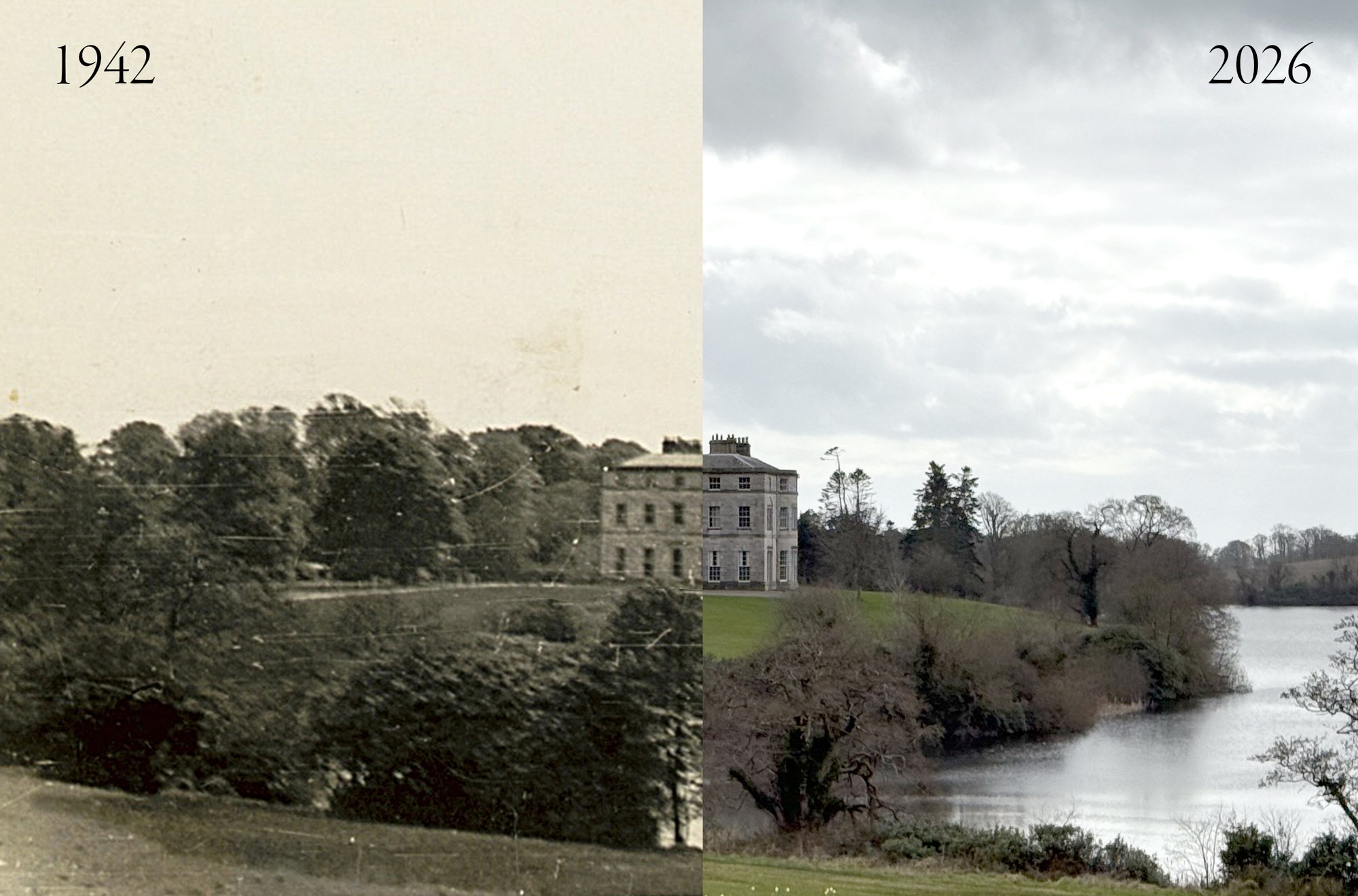
This was, without exaggeration, one of the coolest experiences of my life, and it comes down to two women who made it happen: my wife, Tina, and Lolly Spence, the guide we hired this past March to take us through Northern Ireland. But it starts long before either of them.
Around 2005, I sat my grandfather down and recorded him talking about his life, and in particular the four years he spent in the European Theater of World War II. He was a twenty-one-year-old from small-town Georgia, and he went by way of Eatonton, Atlanta, and New Jersey, then across to Belfast, in Northern Ireland, down to Newcastle, and out to the Seaforde house in County Down, which is what this post is really about. He spent two weeks that fall billeted on the walled estate, then camped at Clough for the rest of his time there.
Tina had been to Ireland multiple times, and from about the time we met in 2014, she’d had it in her head that she’d show me her homeland someday. Her maiden name is Boyle, she’s part Irish (honestly, a lot Irish), and she’s found her people over there. She’ll take any excuse to go back, and this would be her fourth trip, my first. We planned it for 2020, and had to cancel just days before the nationwide travel ban came down.
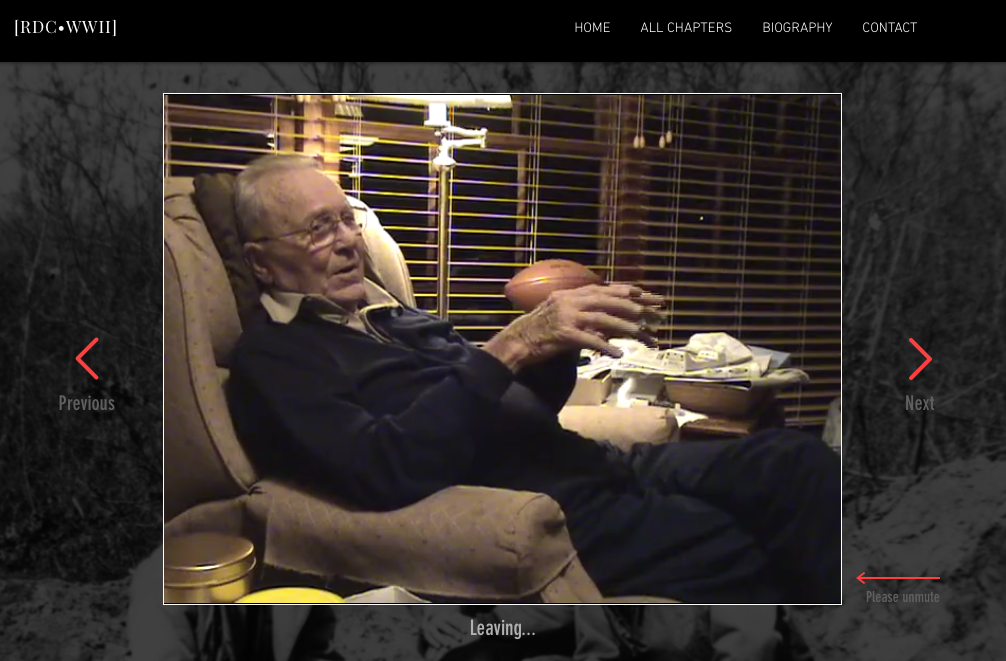
I’d put that recording on DVDs and handed them out to the family around 2007. Those discs are long gone now, along with the players that used to read them. But that lockdown is where the whole thing quietly turned. With time on my hands, I took all the video from my grandfather’s interview, uploaded it to Vimeo, and built a website around it so my family (or anyone, really) could still get to it now that DVDs were hard to come by. You can see the whole thing here, or jump to the roughly seven minute chapter on Seaforde here.
Fast forward to 2025. By then Tina and I had watched that chapter many times, and as we planned this trip it hit us: Newcastle is only about two hours north of Dublin. We could actually make that our first stop. That short a drive, it was a no-brainer.
Originally Tina thought we might drive up and just grab a photo. But the house sits about a mile inside the property, behind a locked gate and walls. You can’t just swing by. So she set out to find a guide who might get us inside. After striking out on a couple, she found Lolly Spence of Hidden Ulster Tours (TripAdvisor), and she was amazing from start to finish. Tina sent her the video, and Lolly actually forwarded it on to the Fordes. I kind of think that helped get our foot in the door.
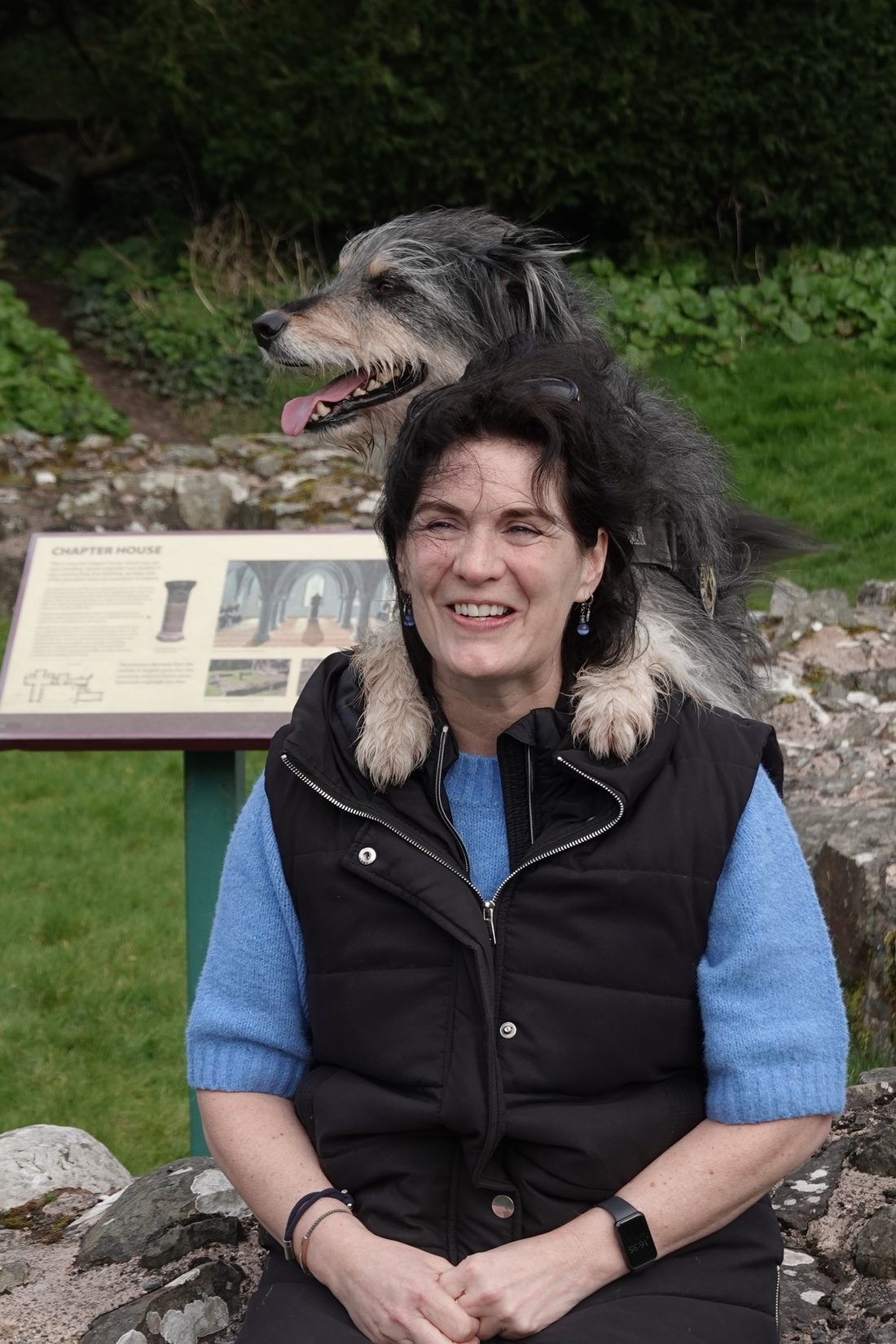
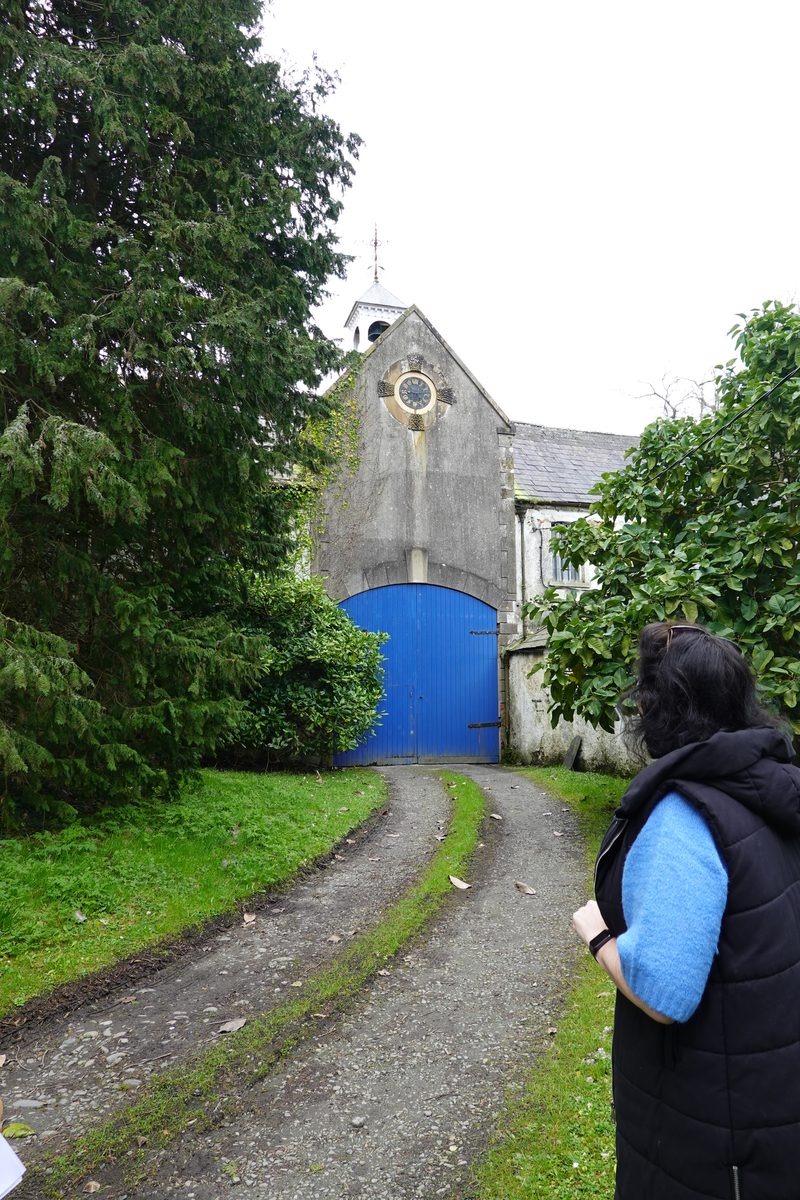
However, there was a vetting process. Lolly had to meet the eldest brother, Mathew, who lives in the old estate manager’s residence on the corner of the thousand-acre property. Once she’d passed muster, he took her up to the Seaforde house itself for an initial look, and after that they confirmed we were on for when we arrived. Mathew was going to show us around himself, but he’s an attorney and had to be in London the day we’d be there, so his youngest brother, Finnian, kindly stepped in to guide us. Finnian lives on the third floor of the house; their mother, Lady Anthea, lives on the second; and the ground floor (the entrance, formal dining room, and main living spaces) is shared.
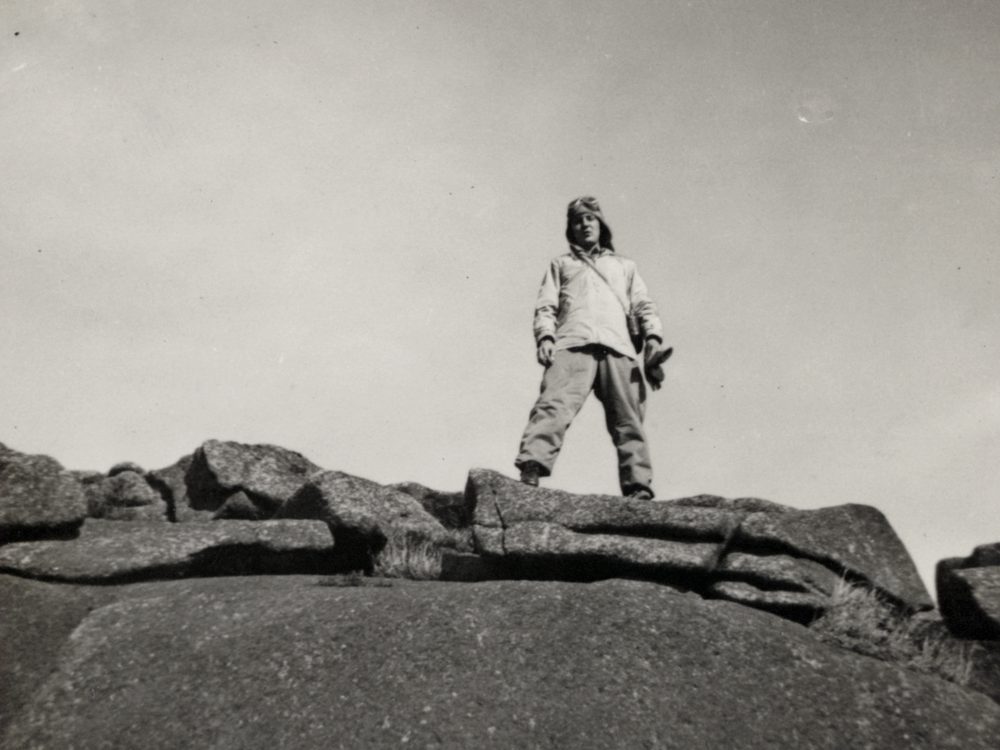
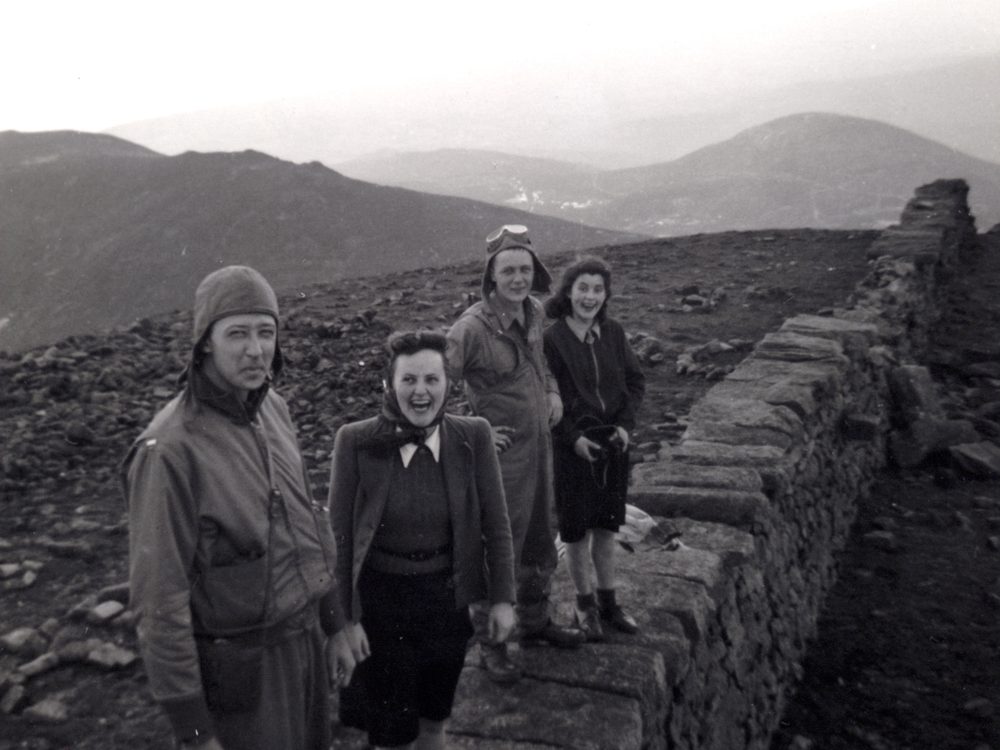
With all that arranged, we woke up in Dublin after our first night in Ireland, and drove up to Newcastle. Newcastle sits “where the Mountains of Mourne sweep down to the sea.” Papa said it affectionately this way, like the old Irish song. We didn’t have time to climb it ourselves but promised it would be on the list when we return. My view is the one from the bottom, looking up. Papa climbed them back in 1942, here he is on the granite at the top, and up by the Mourne Wall with his buddy Ricks and two girls they met while up there.
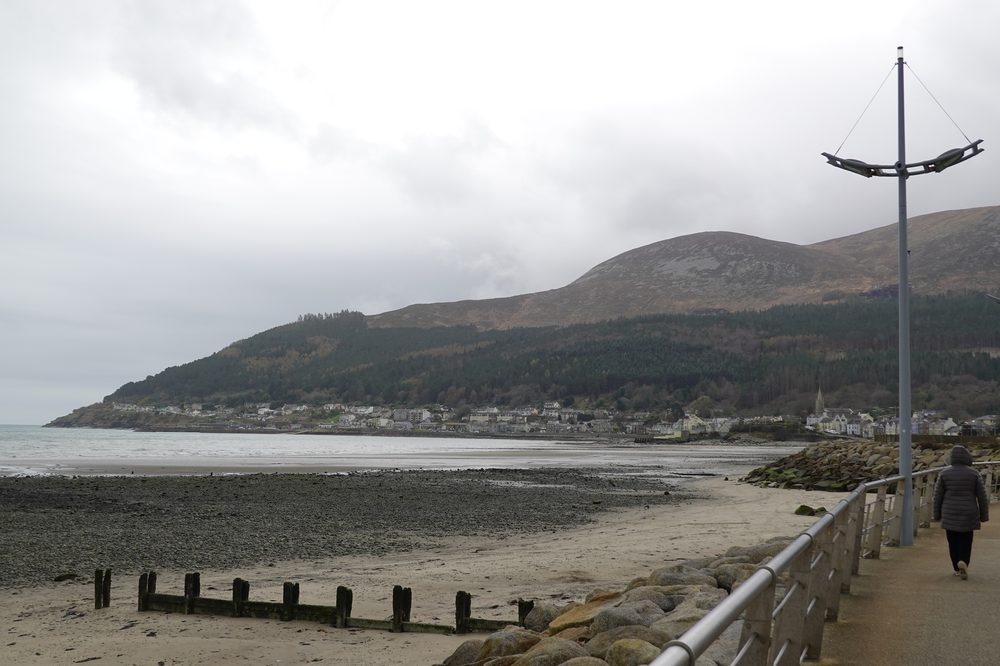
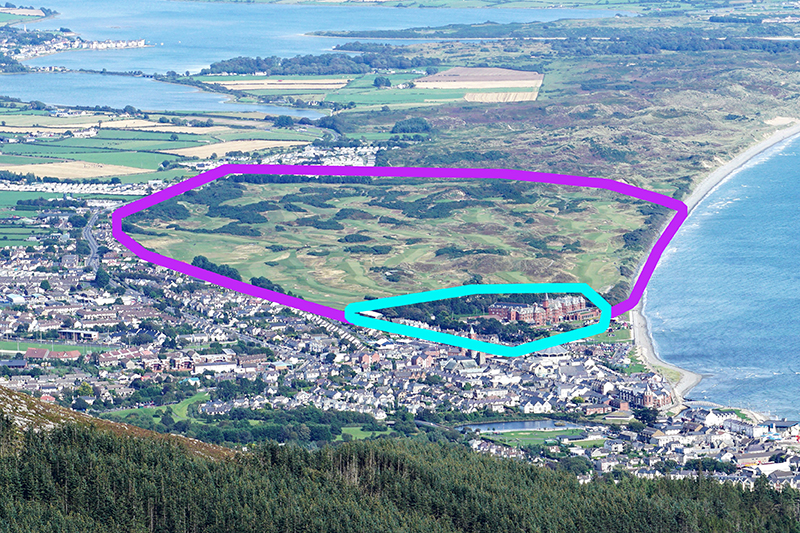
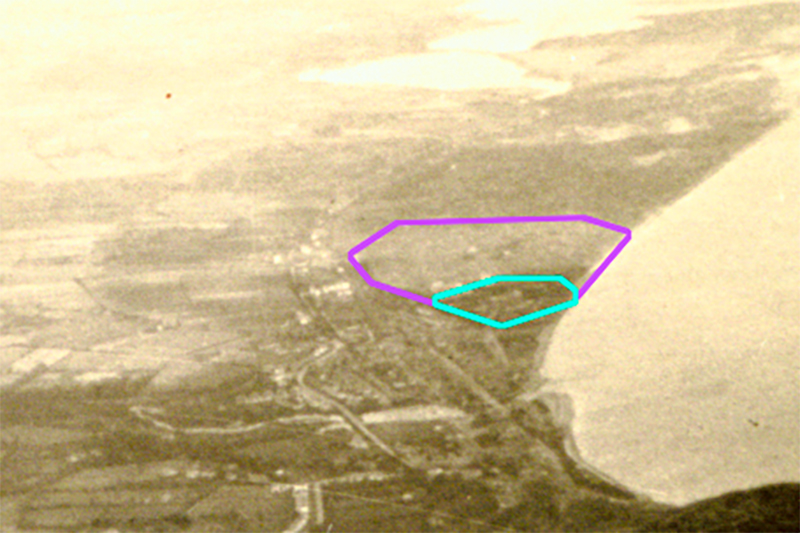
When Tina was planning the trip she found us an old hotel in Newcastle, the Slieve Donard, and decided to make it our one “splurge” night. It’s named for the tallest of those mountains, a grand five-star Victorian hotel built in 1898, and here’s the thing: my grandfather would have seen this exact building as he stepped off the train in Newcastle. And here’s something I only worked out while writing this up. I went looking for a present-day photo from a similar spot, set it beside Papa’s, and once the two lined up, there was the hotel. You can barely make it out, but it is there, and he would’ve definitely seen it! The Royal County Down Golf Club (opened 1889) helped me get my bearings.
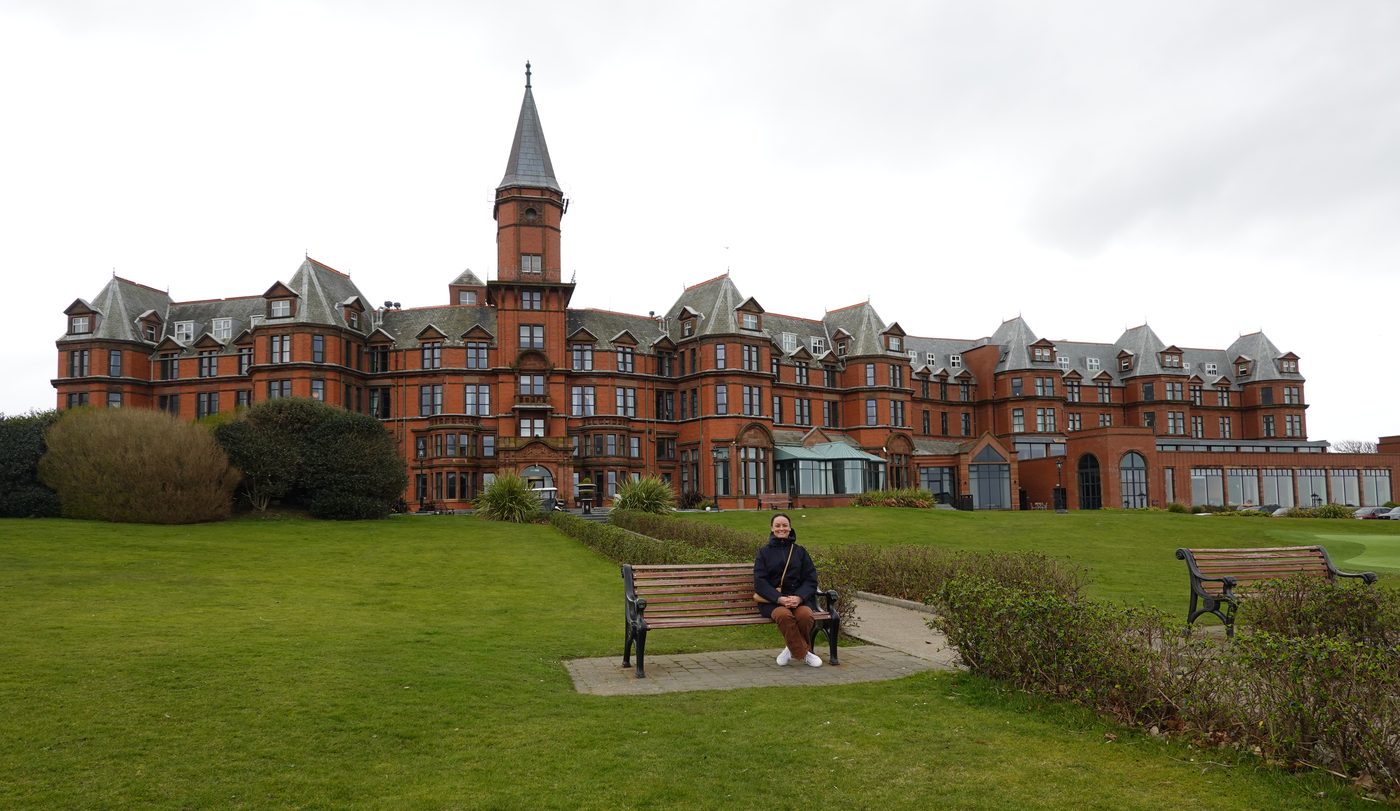
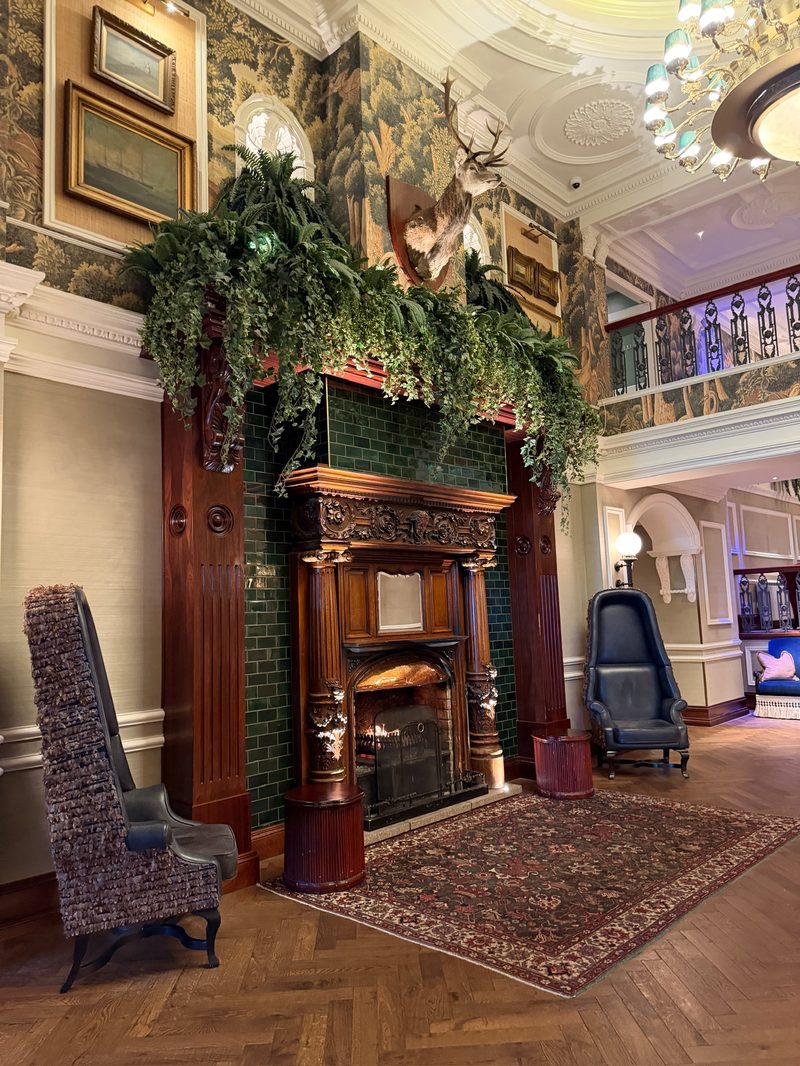
That morning, Lolly met us in the Slieve Donard’s grand lobby. We walked into town (over by the old train station) and grabbed coffee while we mapped out the day, and from there she did all the driving. This is her home turf, and like any good guide she knows it like the back of her hand, pointing things out the whole way. It’s about twenty minutes from the hotel to the estate.
Seaforde house sits just outside a little town called Clough. In the interview, Papa mentioned coming down into this town and watching King George VI pass through in a procession, all the soldiers standing at attention along the road. Lolly pulled over and let me get out and take a picture from roughly the same spot.
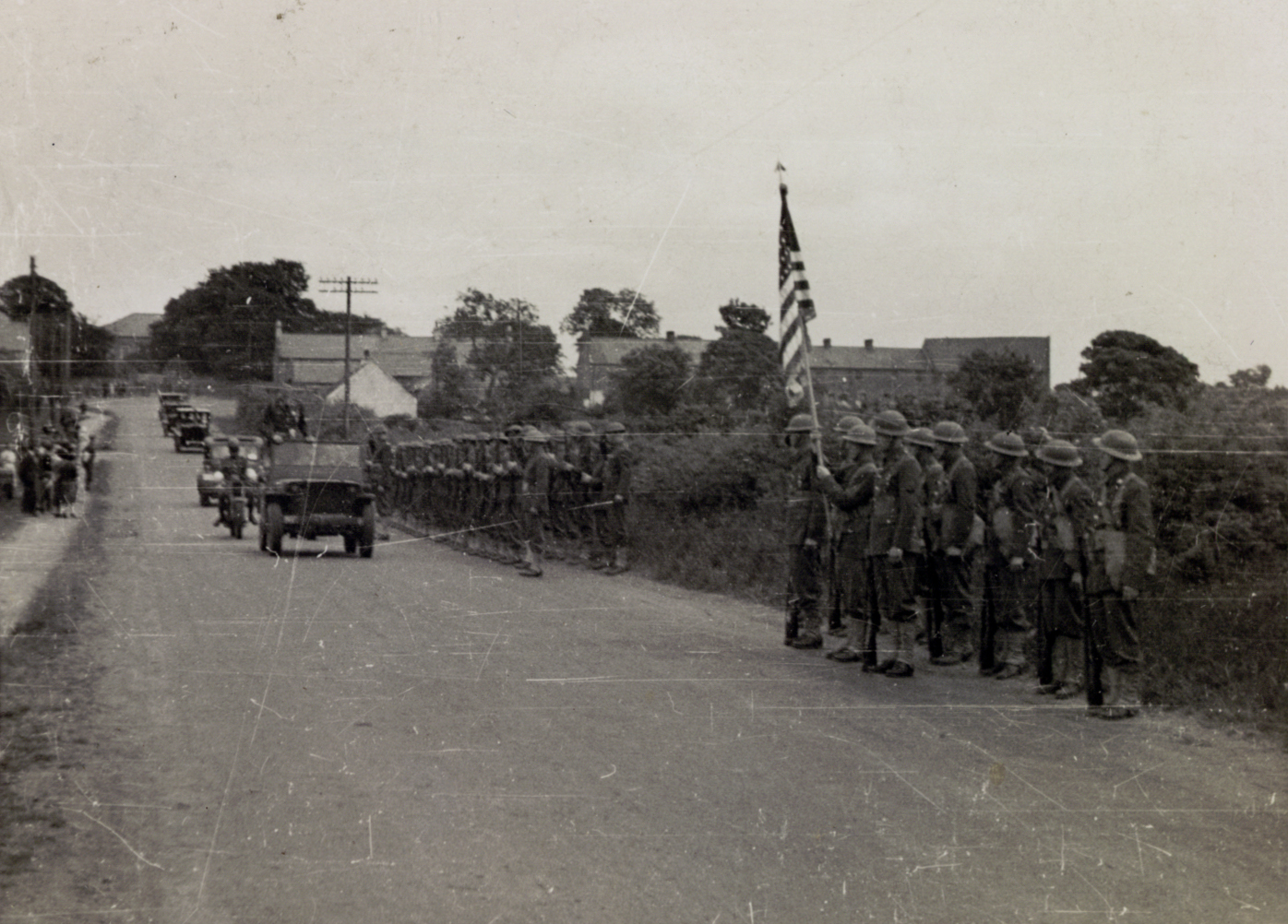
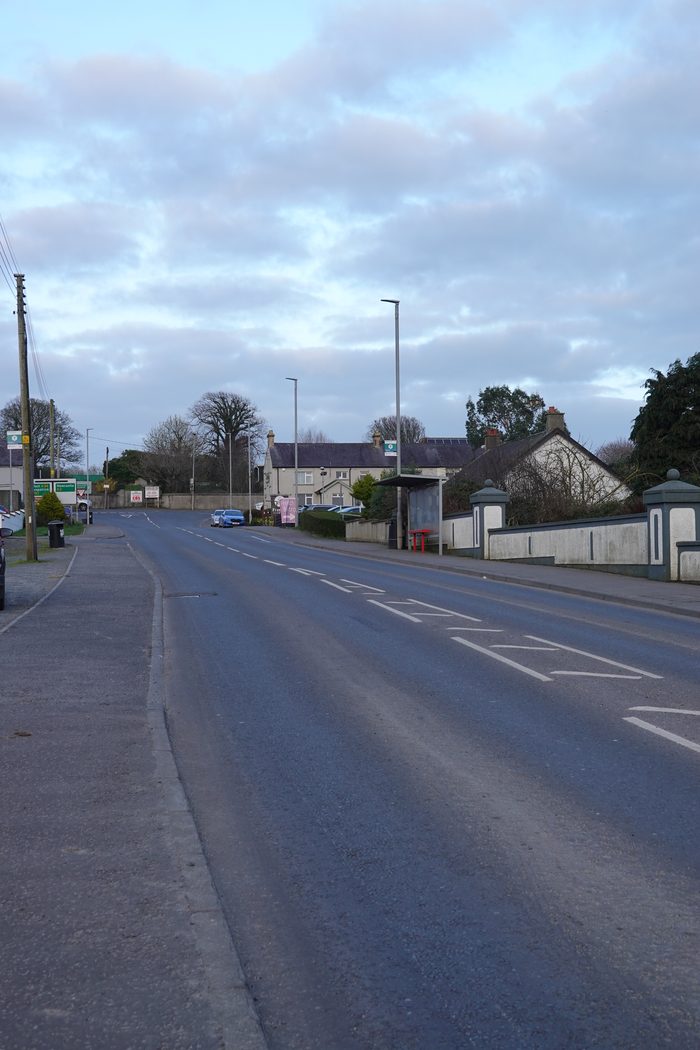
From there, it’s just a few minutes to Seaforde itself. The estate has two entrances now: the one they currently use, and the original main entrance (no longer in use) that my grandfather would have come down. Lolly was insistent, with us and with the Fordes, that we use the old one. That way we’d literally be traveling the same path Papa did coming in.
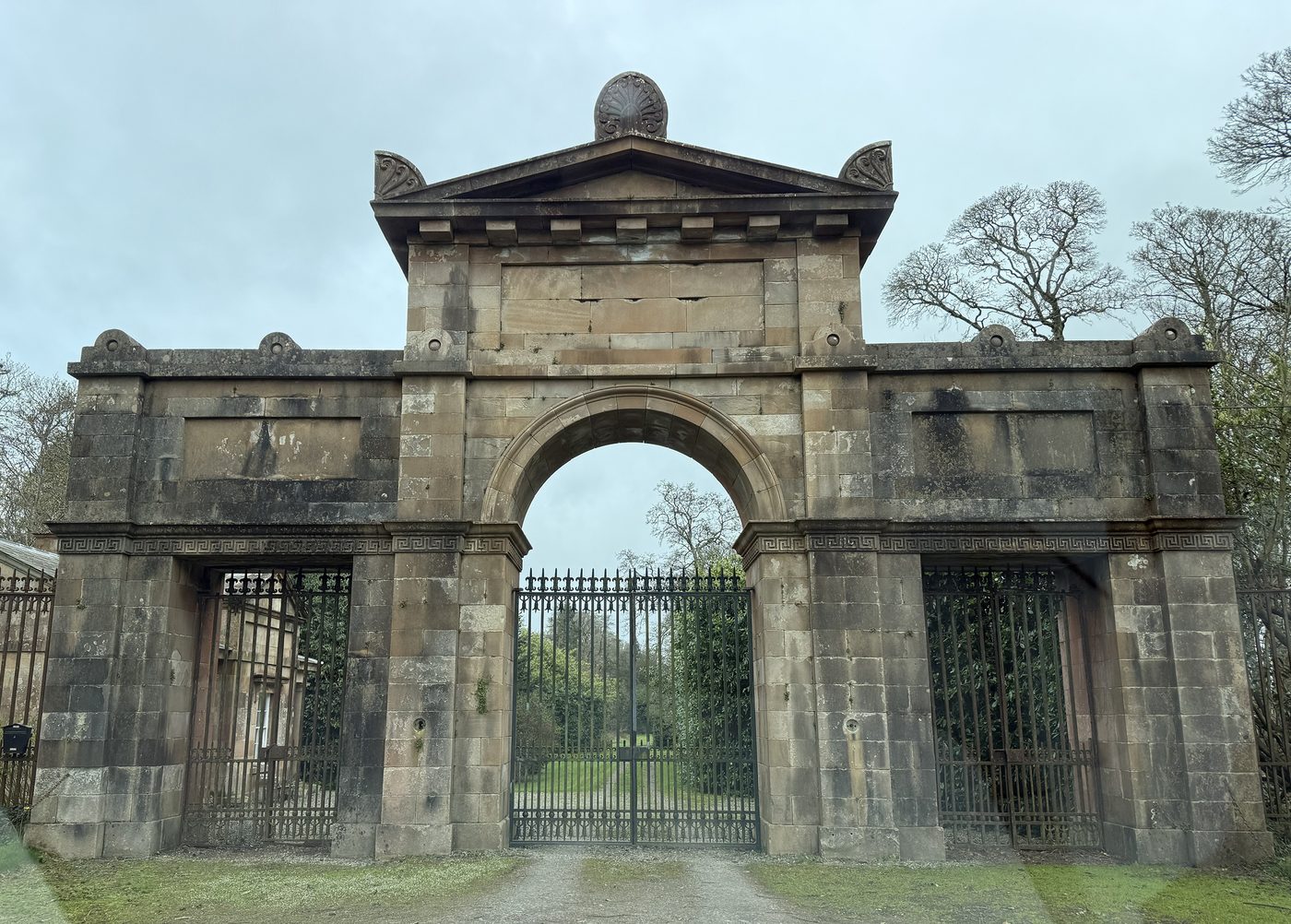
The road hadn’t been used in a long time and was rough, but it was beautiful, and you can see above what I filmed the whole way in. We came around bend after bend, under tree branches, past a lake, and the anticipation just kept building. The photo (the one at the top of this post) was the whole goal of the excursion. And honestly, back when this all started, it was Tina’s plan too, but it turned into so much more.
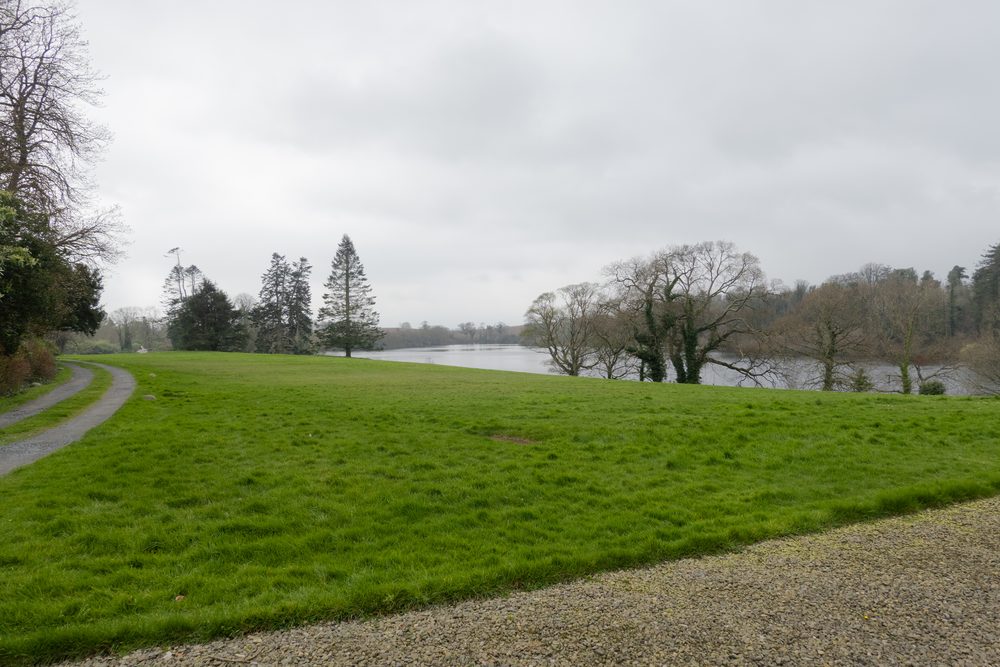
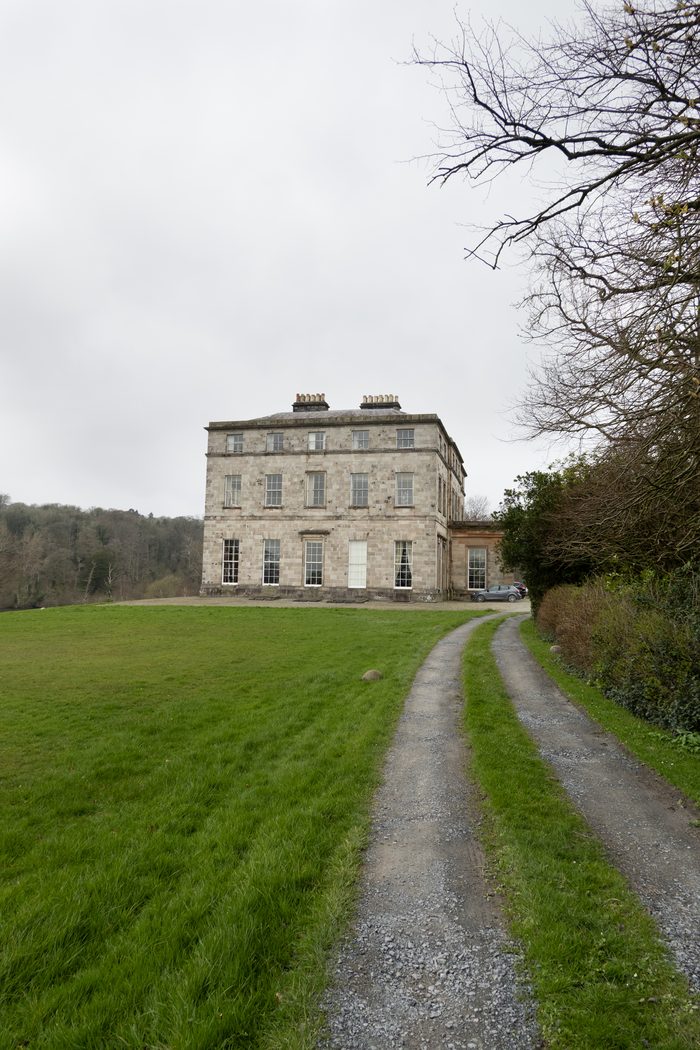
After about a mile of bumpy ground we came around one last curve, and there it was in all its glory. I had my camera out immediately, thinking this might be my only shot. Was I wrong. As we rolled closer we could see Finnian standing at attention beside the front door, waiting to receive us like visiting dignitaries. We were nothing of the sort.
Before I take you further around the grounds, it’s worth stopping on what this place actually is, because I didn’t really grasp it until I was standing in it. The Fordes go back something like four hundred years: originally a Norman-Irish family from County Meath, before they ever came north. This ground was purchased by one of their ancestors, Mathew Forde, from Thomas, 1st Viscount Lecale, between 1615 and 1628, and the family has held it ever since. That’s insane to me: the same family, the same land, for going on four hundred years. And it’s not just the house; they built the village of Seaforde too. The whole place carries their name. (You can read more of the family’s history, and plan your own visit to the walled gardens and butterfly house, at Seaforde Gardens.)
There’s one thread in all of it I can’t get over. That ancestor who first purchased the land was named Mathew. The one who built the first great house here, generations later in the early 1700s, was a Mathew. So was the next, and the next: the name runs straight down the line. And the eldest brother who runs the estate today, the lovely man Lolly had to meet and win over before any of this could happen, is named Mathew. First to last, it never left the house.
But here’s the part that really got me. Think back to the family living here in 1942: there was a little boy in the house that year, maybe two years old, named Patrick Forde. He grew up to inherit Seaforde from his father in 1961, and in 1965 he married Lady Anthea Lowry-Corry, a daughter of the Earl of Belmore from Castle Coole over in Fermanagh. Patrick was the patriarch of this estate for the rest of his life, right up until he passed in 2008. Then I did the math: the toddler underfoot in this house while my grandfather was billeted here was still alive, still lord of Seaforde, in 2005, the year I sat Papa down and recorded him remembering the place. Two lives, the young soldier and the child of the house, overlapping by more than sixty years. Lady Anthea lives in the house today; she has for sixty years now.
Okay, on with the tour. Finnian started by walking us back around the opposite way in which we came in. He wanted to show us where the soldiers built all of their Quonset huts, the ones they lived in and operated out of. There’s nothing back there now but grass.
He had been kind enough to print out some photographs for us, pictures of the American troops who were stationed here during the war. I scanned and posted some of them below.
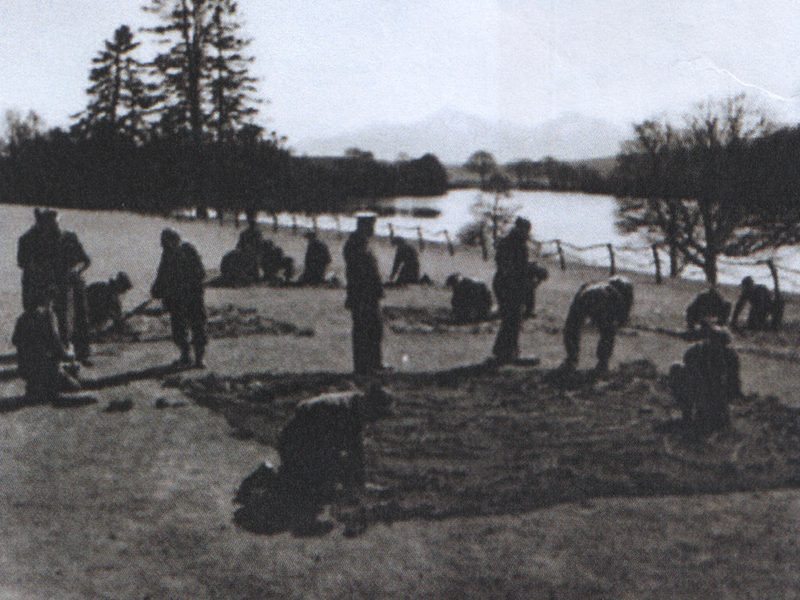
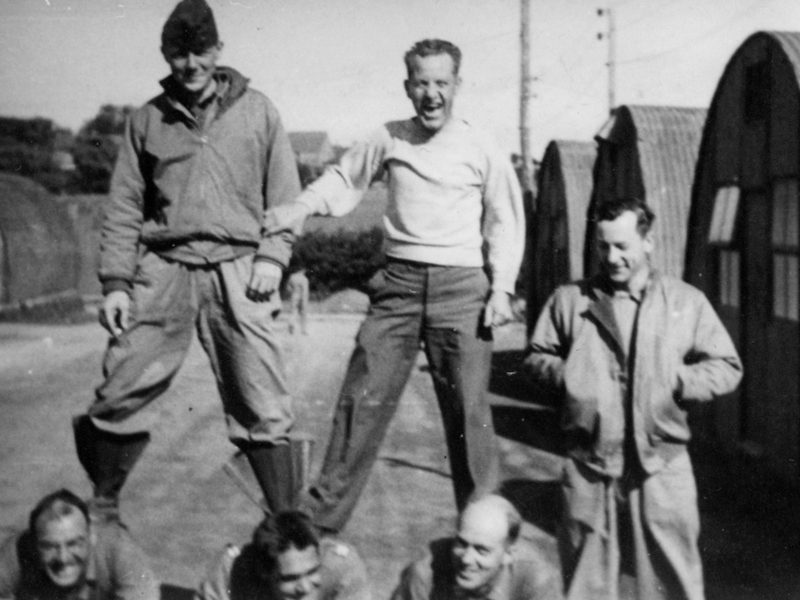
Papa below (top left of photo) standing in a row of Quonset huts.
From here we walked around to another large set of buildings that looked to be used through the years for storage, grounds maintenance, and horse stables. Before I go any further, though, there’s something worth knowing about what happened to this place during the war. When the British Army commandeered the house, they gave the Fordes forty eight hours to clear everything out, furniture, paintings, equipment, horses, three hundred years of accumulated belongings, out of the house and off the grounds. Two days. They were allowed to keep one stairwell packed with whatever they could fit. Anything left behind, anything they couldn’t move or stash in that stairwell, got moved out and destroyed. So as we go through the rest of the grounds and buildings, it’s worth remembering what they had to save, and how little time they had to do it.
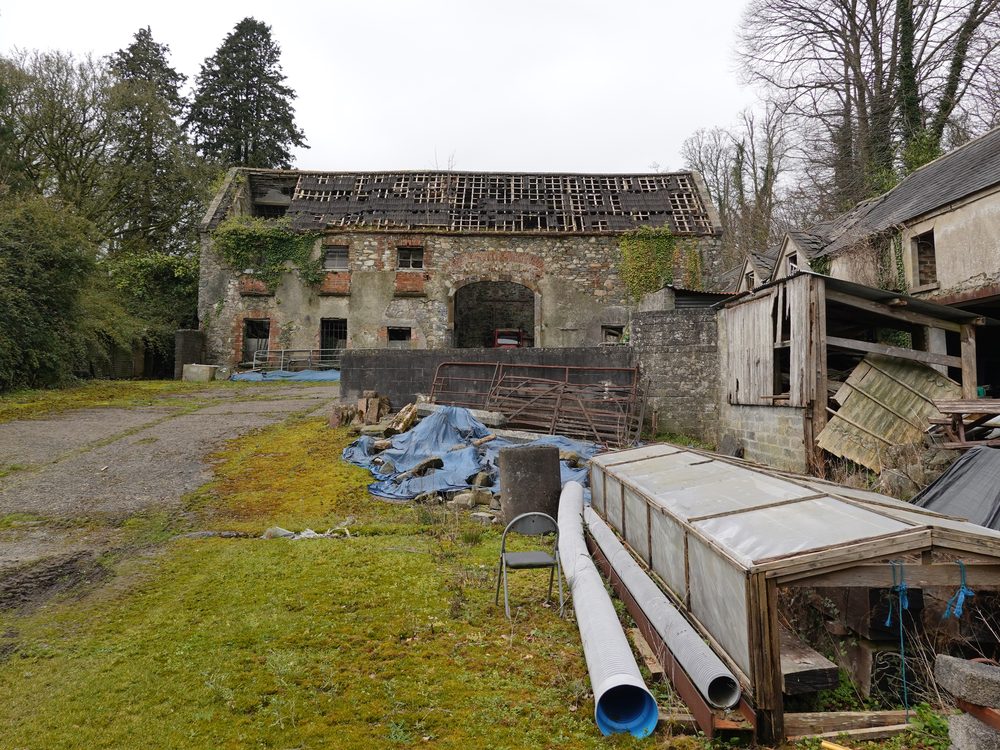
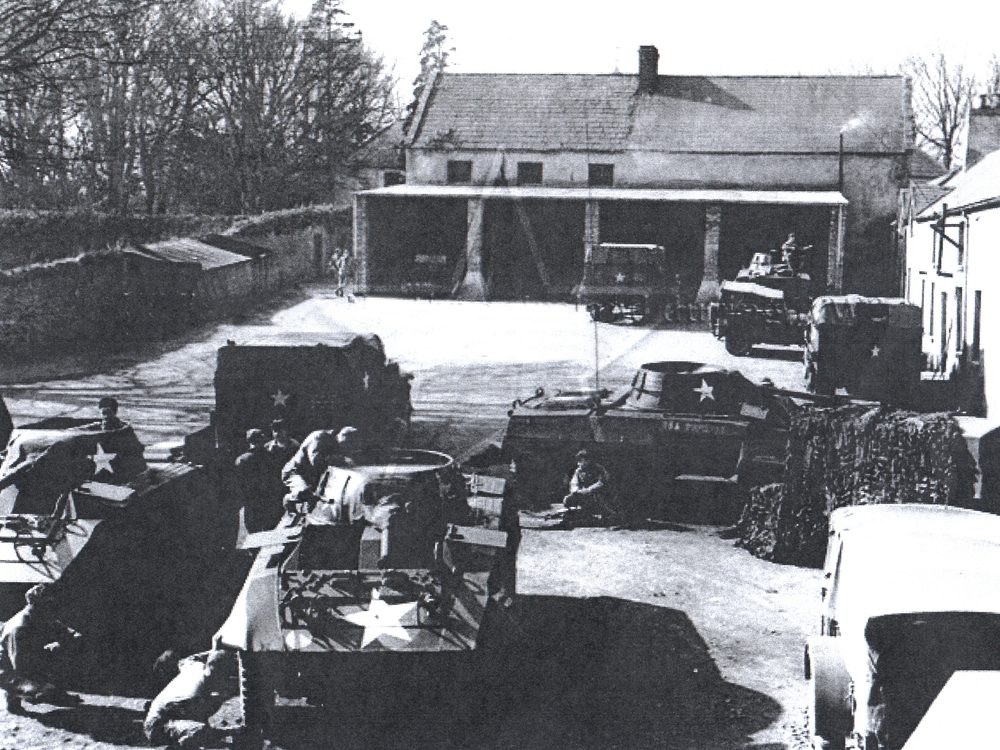
The building in back, and the one to the right, are the same ones still standing at Seaforde today.
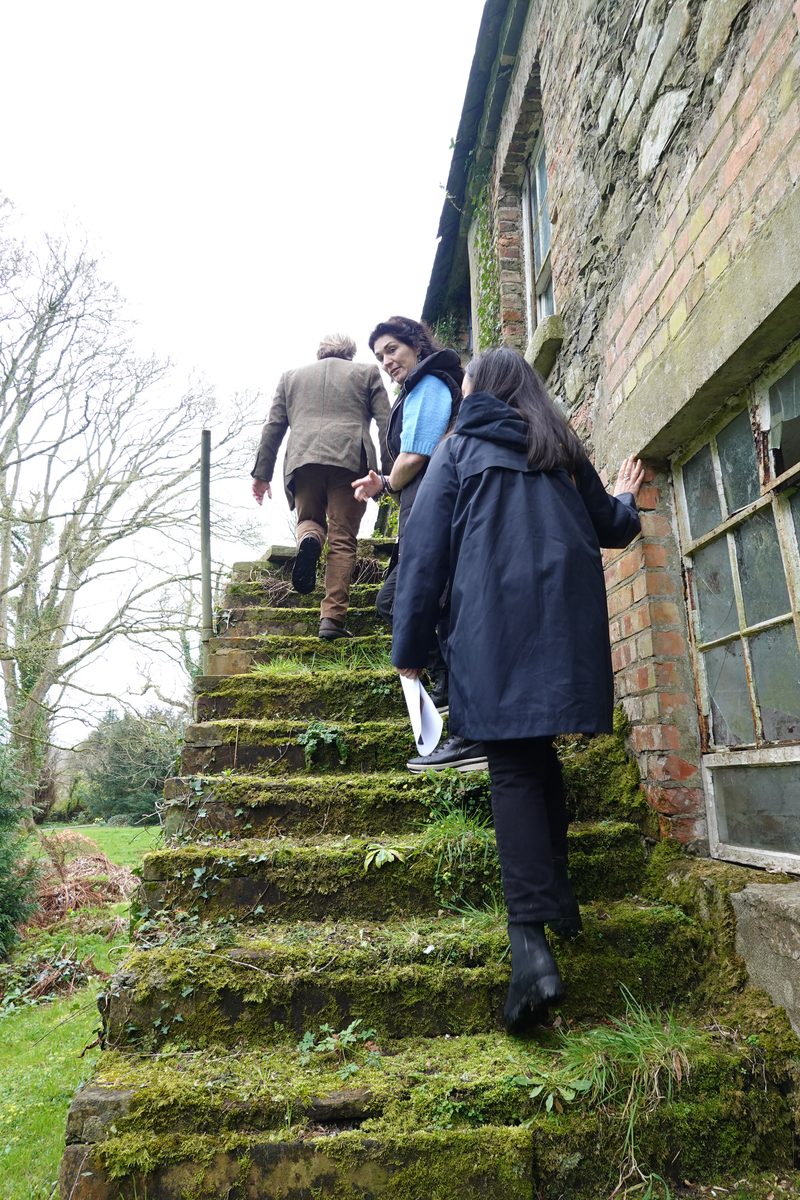
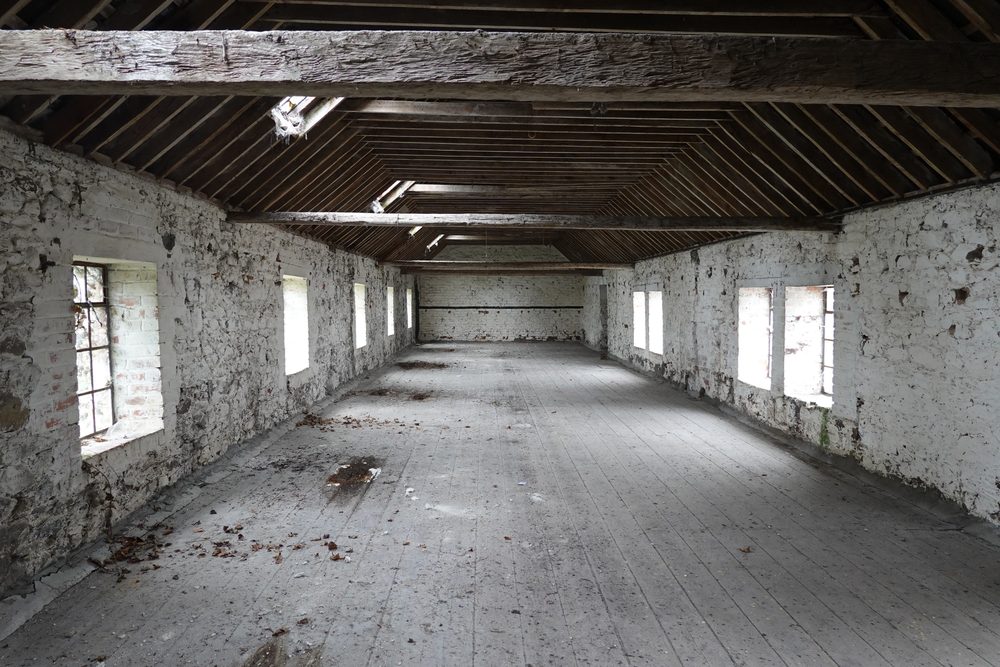
Walking through the outbuildings we came to the stables. We walked up the stairs to the upper level, with the horse stalls down below. The windows up here were cut in and installed by the soldiers themselves. In the matching building across the way, they were kind enough to brick them back in afterward, more or less restoring it to how it looked before (albeit some pretty substantial differences in the brickwork). These upper rooms served as bunkhouses. These days, Finnian told us, they rent them out for film shoots. Ironically, one recent production staged this exact space as a German triage hospital. The crew even asked if they could fly a Nazi flag above the building for a scene. Finnian’s answer: “Absolutely not.” People could’ve probably seen it from outside the property if it was hung high enough.
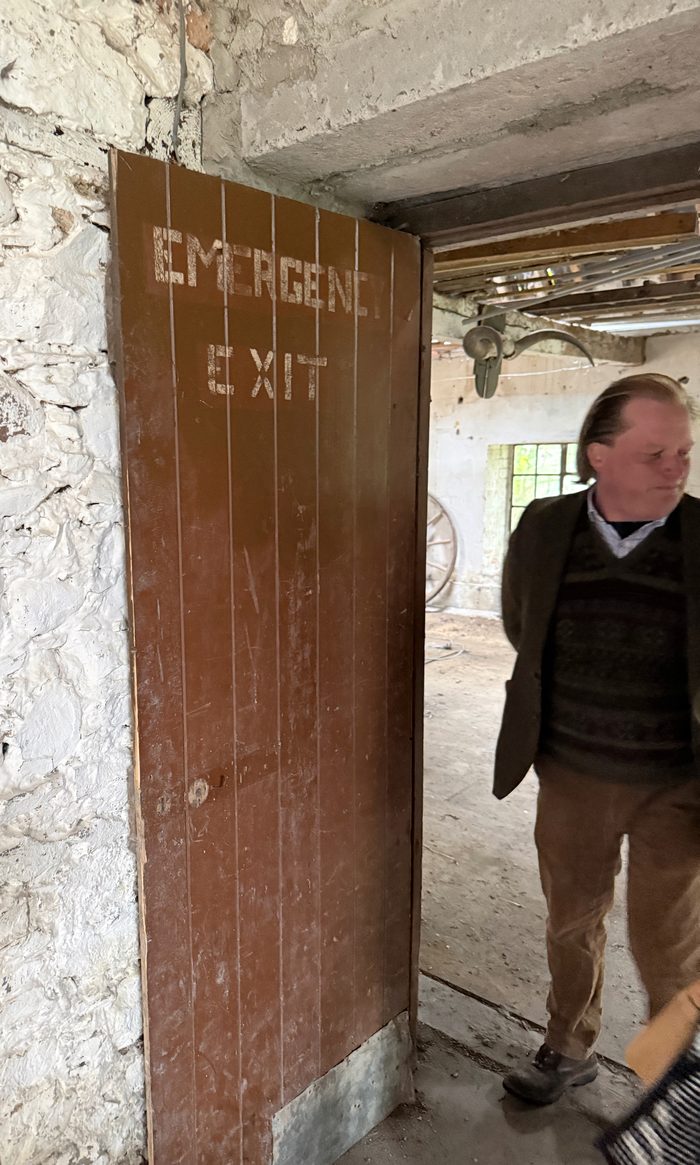
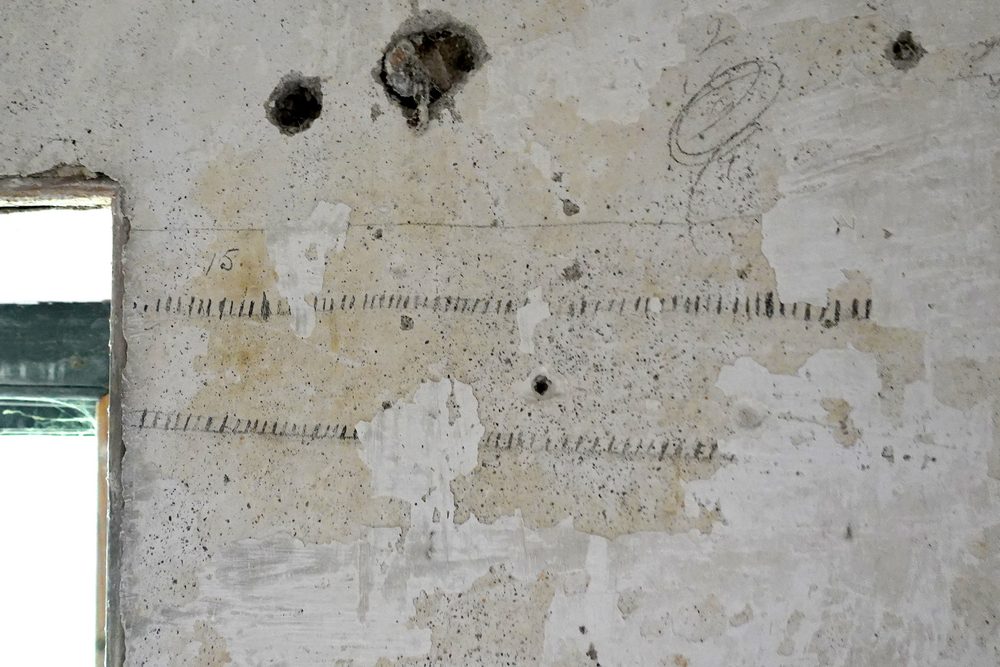
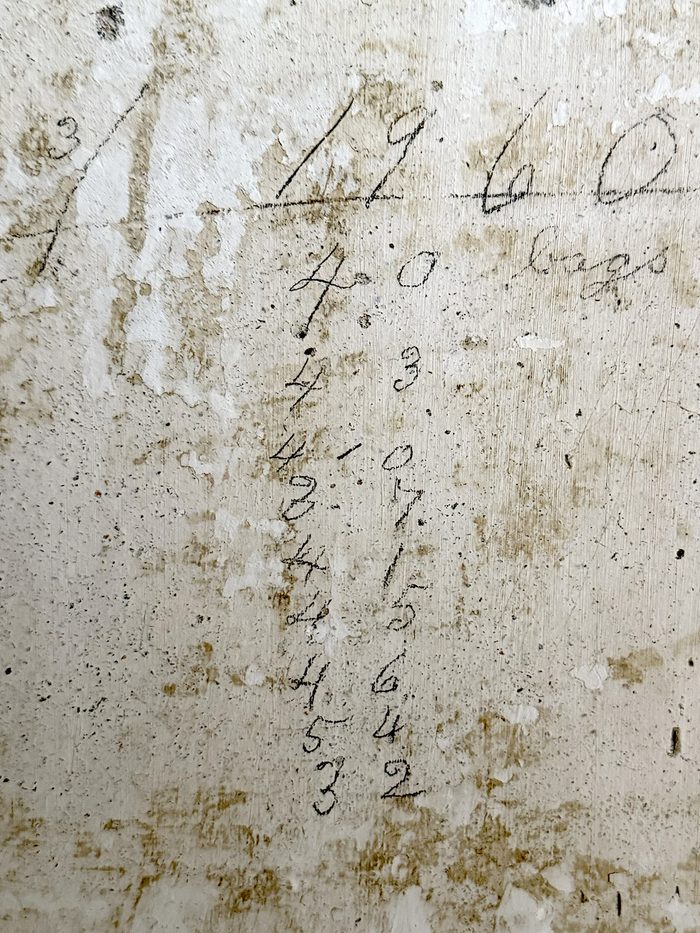
Here’s some of what’s still on the walls from the soldiers who stayed here. An Emergency Exit sign, the same one a film crew once painted over without asking, and Finnian made them wash it back off. The nerve. Next to it, what looks like a soldier keeping count of the days he’d been there. And last, some kind of inventory, which Papa would have recognized. He talks about signing for every single piece of equipment the British handed over, right down to the knives and spoons. His inventories were kept in ledgers though.
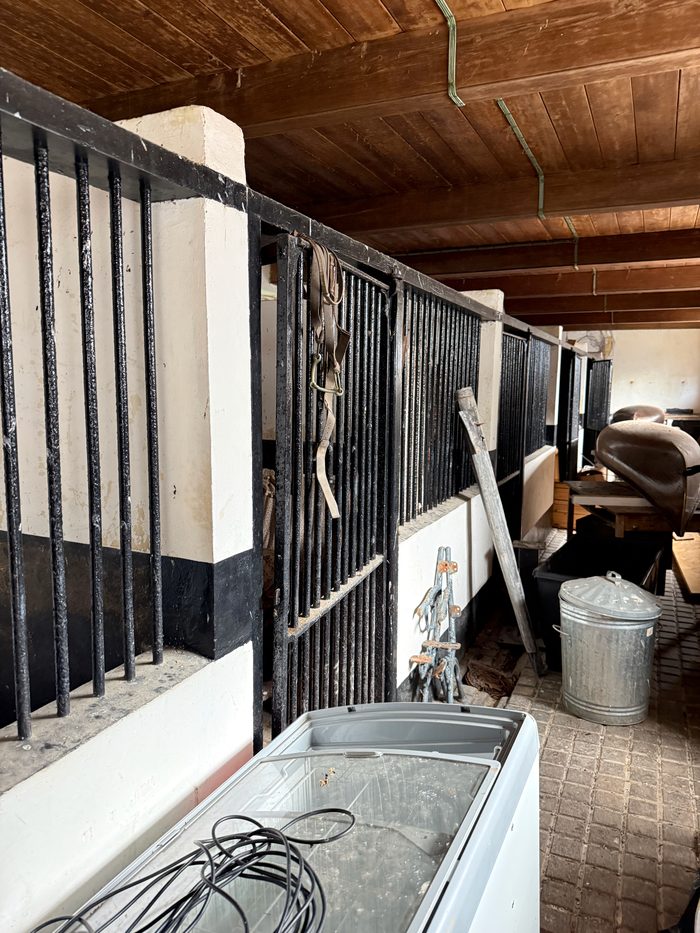
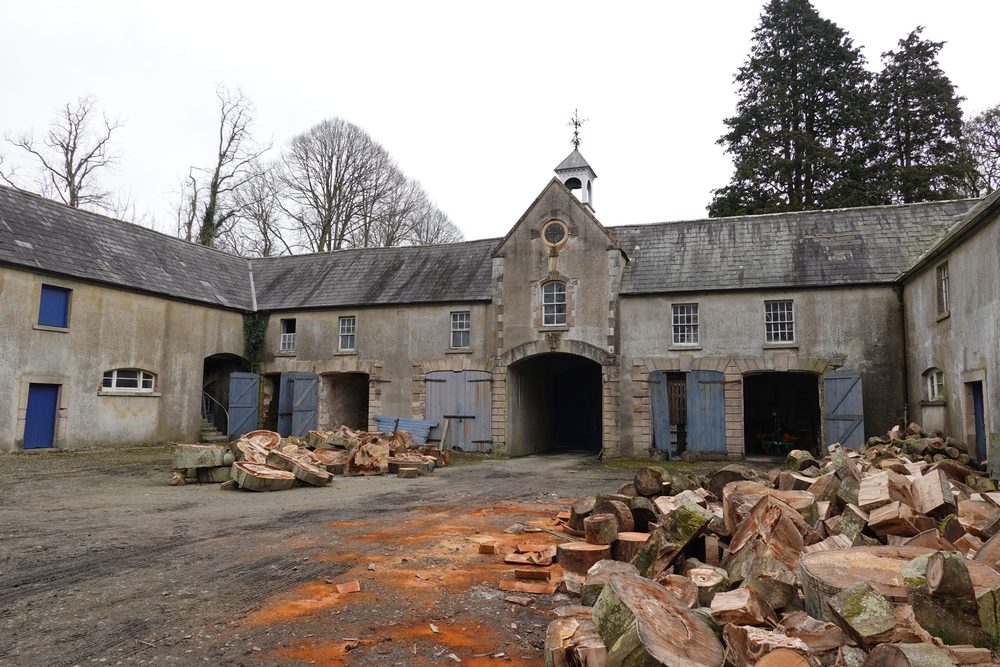
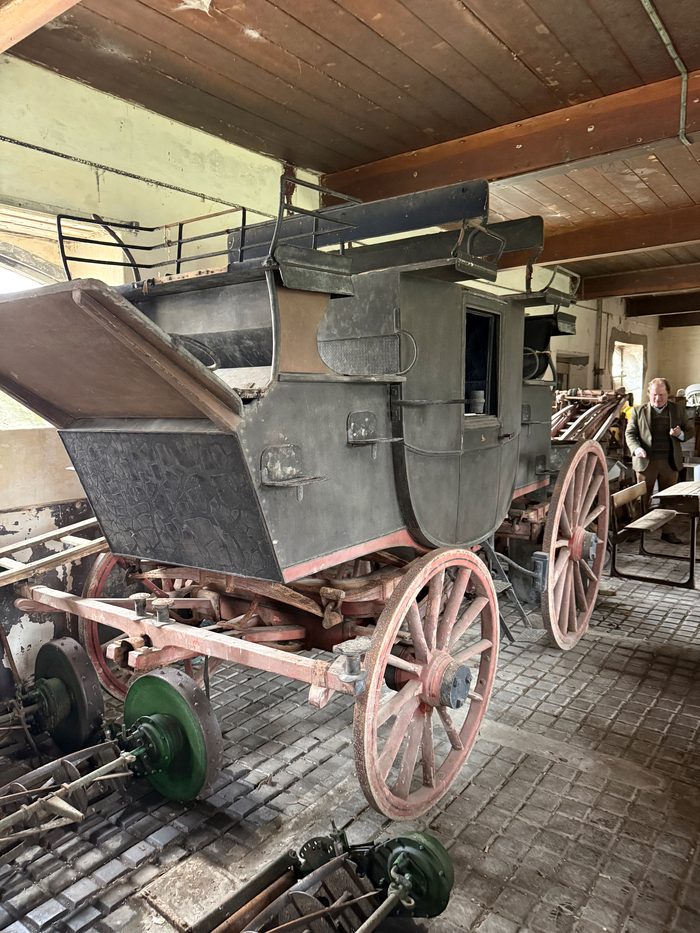
From the upper level of the stables we came down into a courtyard, where they keep some of what they’ve got in storage. Like that buggy... It’s not something someone picked up at a vintage sale. It was in actual use back when horses and buggies were how you got around, and it’s just been sitting here ever since cars took over. Hard not to think about which of the Fordes actually rode around in it. You’ll also notice the wood piled up. A big storm had come through not long before and taken down a lot of trees on the property, and all of it gets gathered and cut into firewood. They need every bit of it, too: that three-story house is heated from the bottom by a wood-burning furnace, and it never stops needing to be fed.
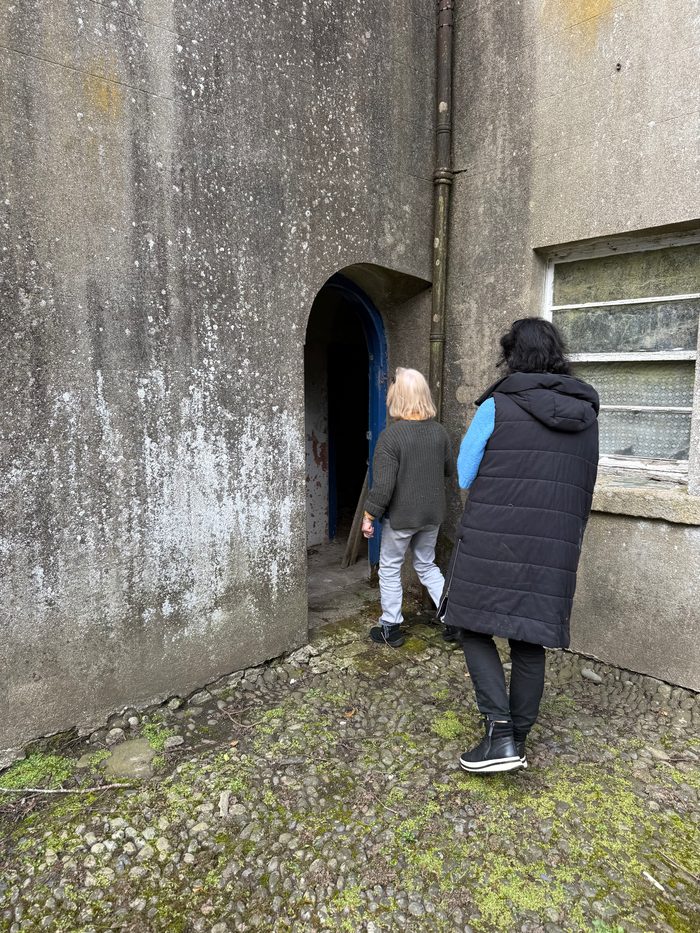
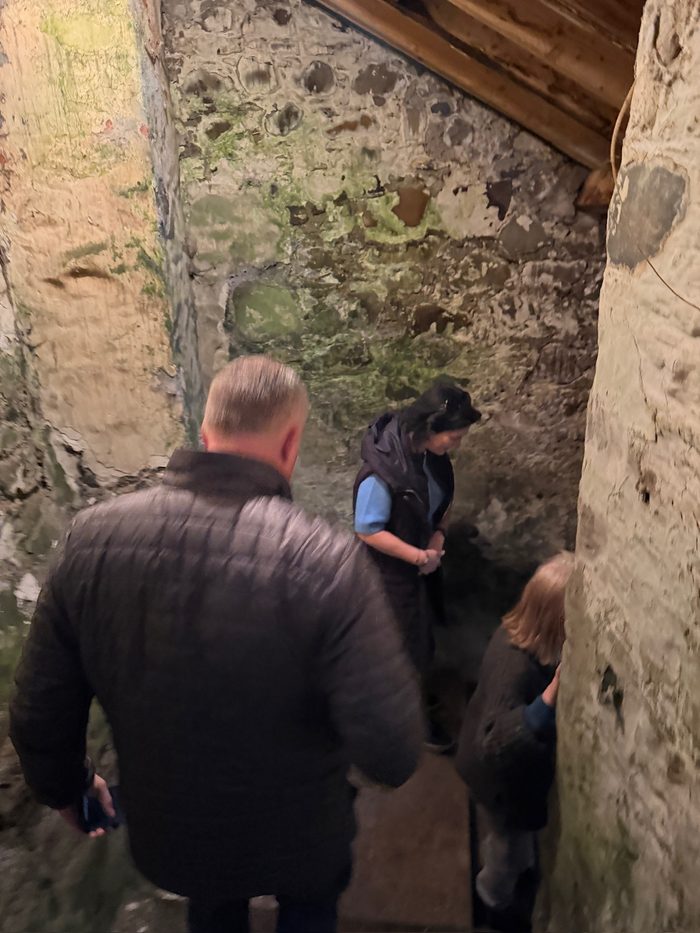
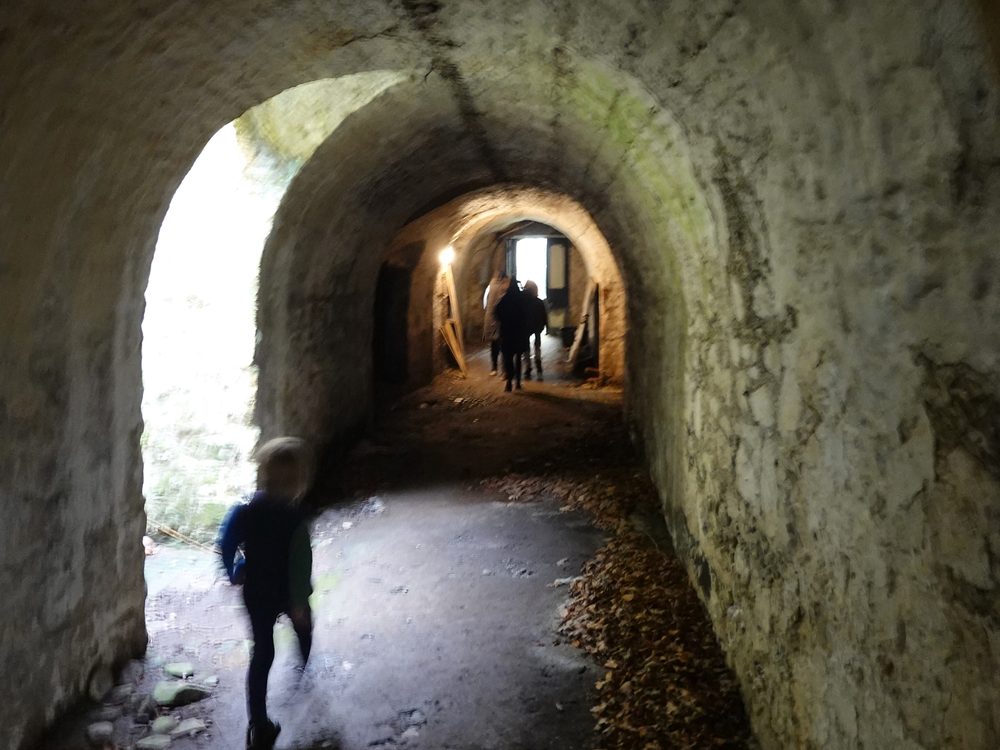
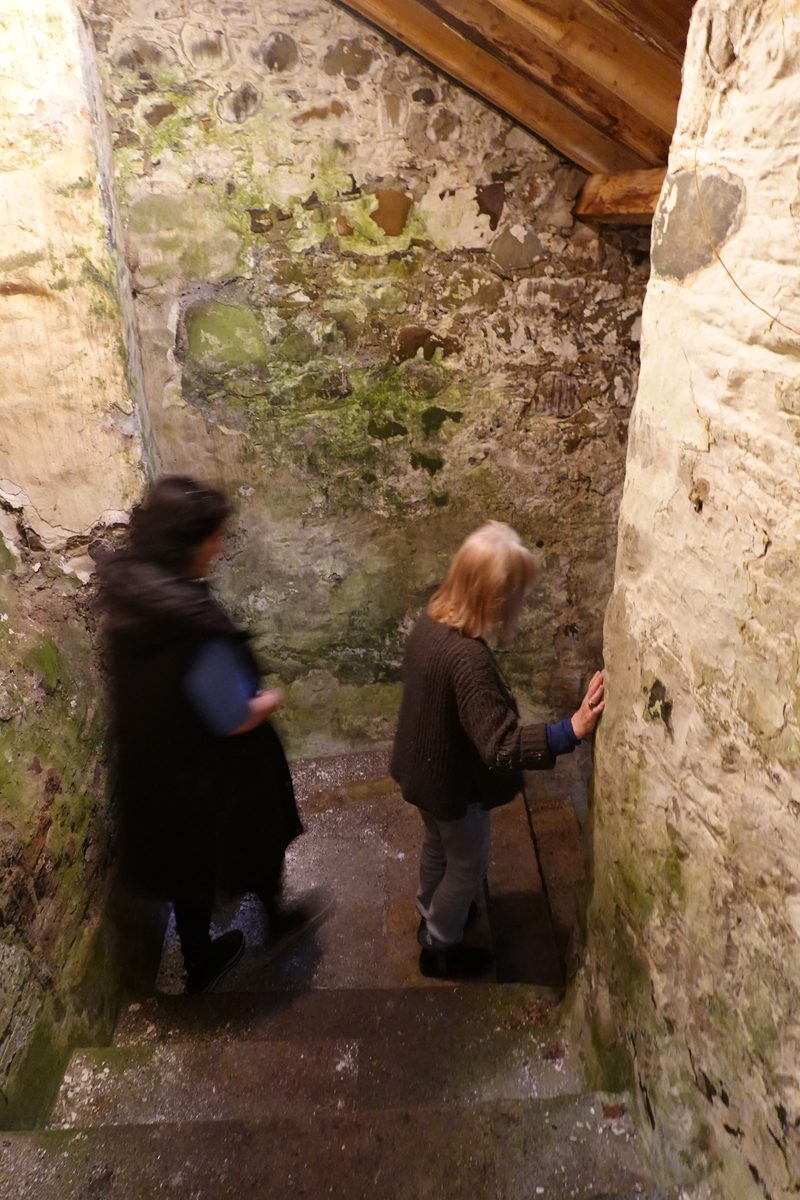
Second to walking in Papa’s footsteps, the coolest part of this whole visit was probably the back door. I call it a “castle” because even though this doesn’t look like a traditional medieval one (too modern for that), it was still built at a time when the possibility of an attack wasn’t zero, and the house is laid out with that in mind. There are only two ways into the place: the front portico where we’d driven up, and this back tunnel entrance. I had no idea we’d be walking into the house this way. You can see us stepping down into it here. It’s deep, and runs very long all the way from these stable houses underground to Seaforde house.
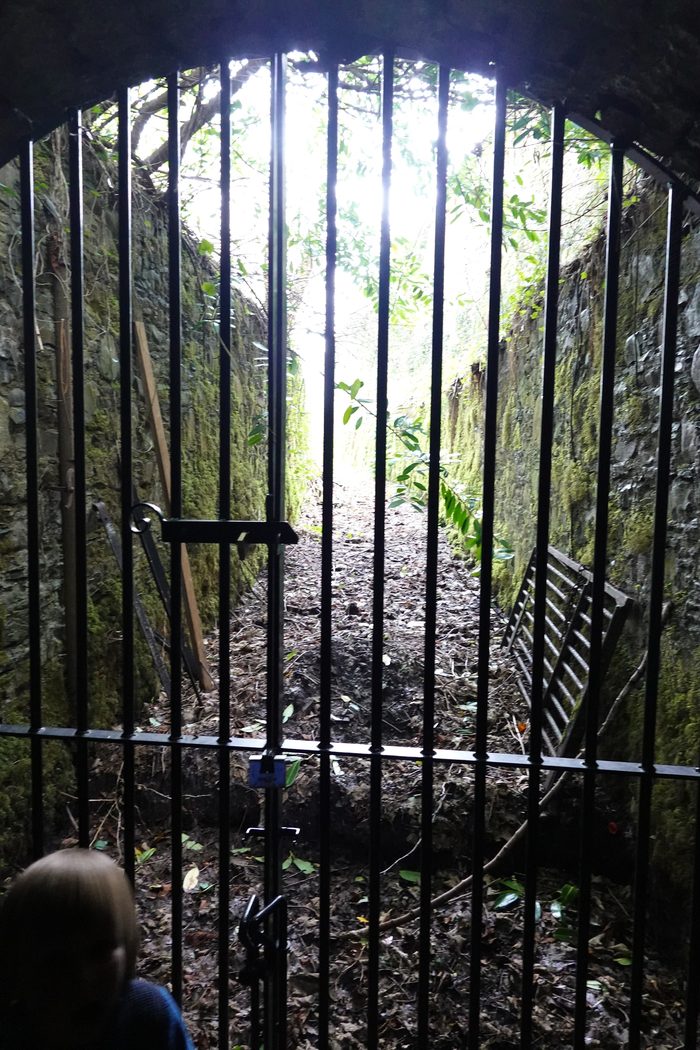
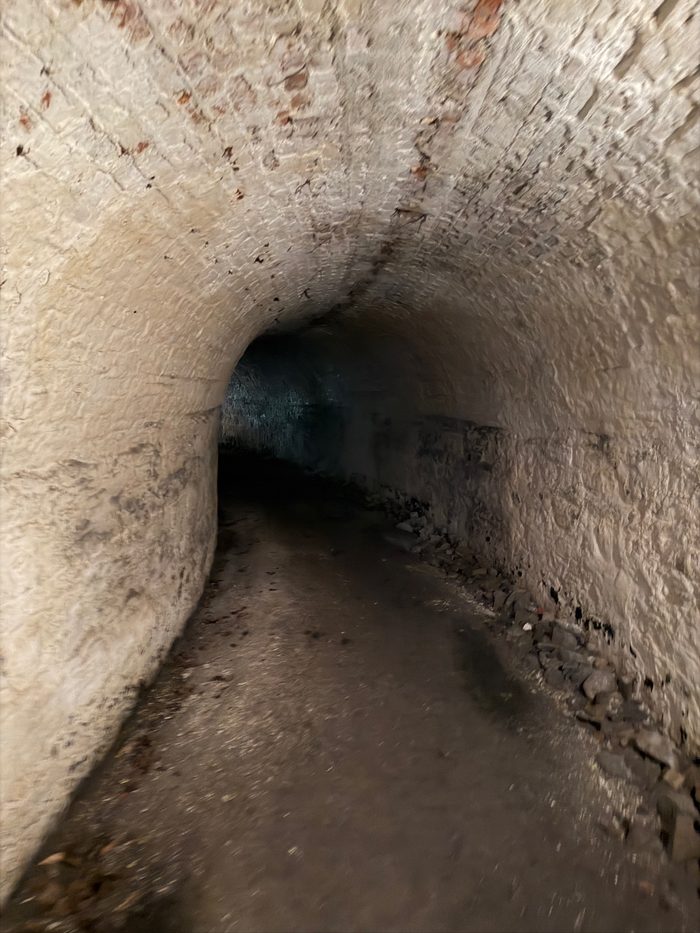
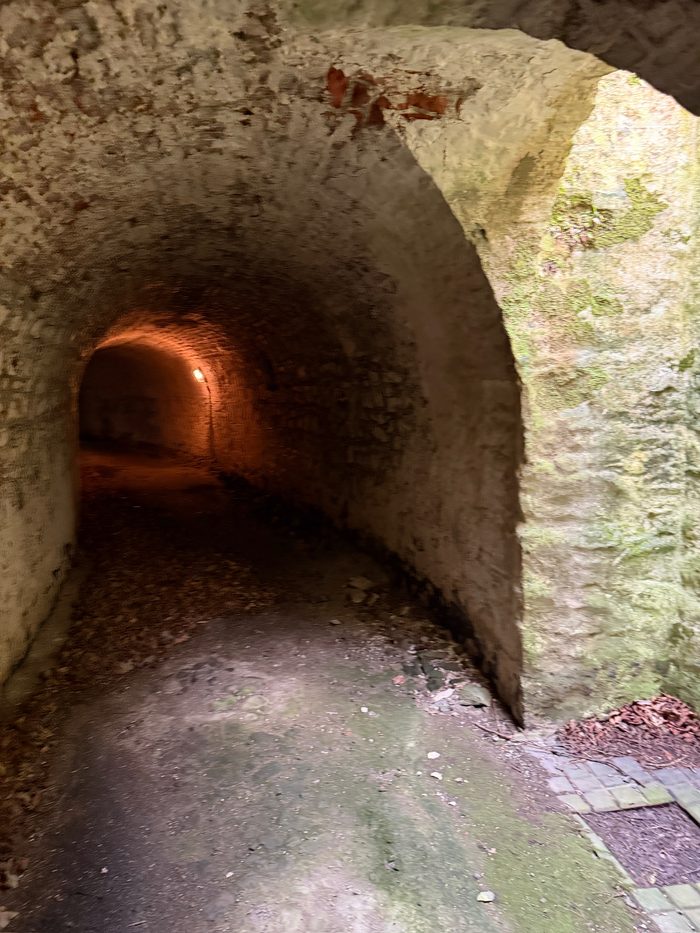
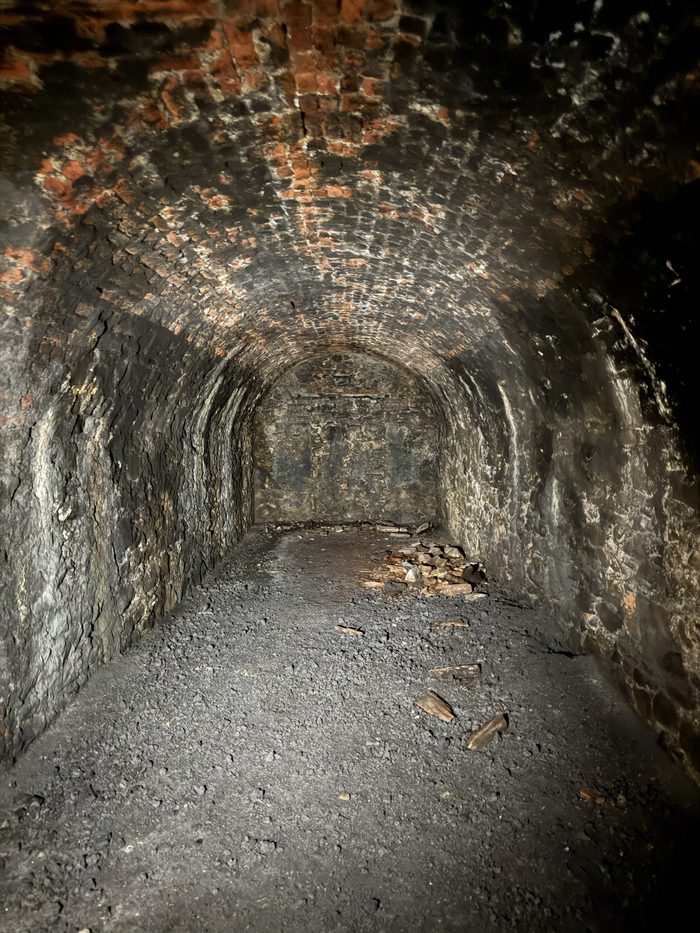
The dark photo on the far right was actually a chamber to the side and doesn’t really do it justice; it felt like it ran back a good two hundred feet. You can tell from the blackened walls that this is where they used to store coal for heating, long since replaced by the wood furnace, but the soot is still there. From here we came up into the family’s actual living quarters. They asked that we not take photos inside, and we were glad to respect that. Tina and I already had more photographs than we ever thought we’d get by this point anyway. There were a couple of exceptions though...
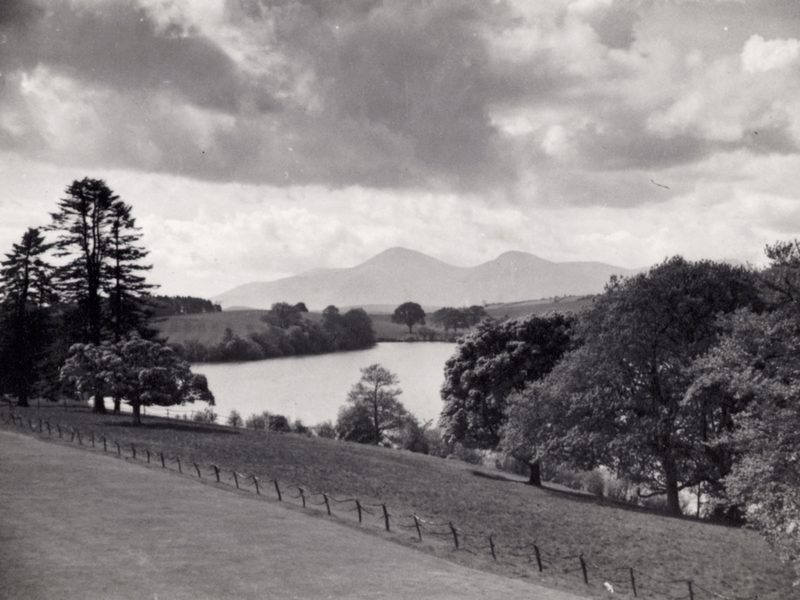
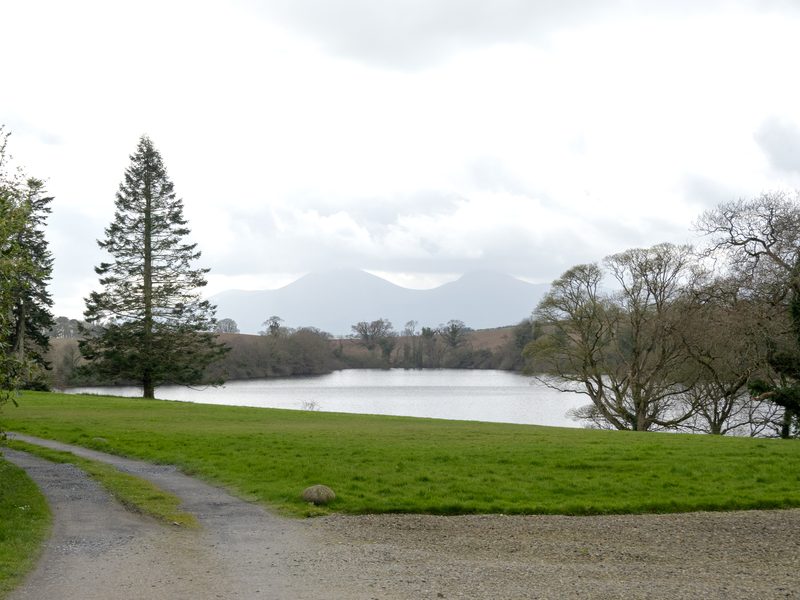
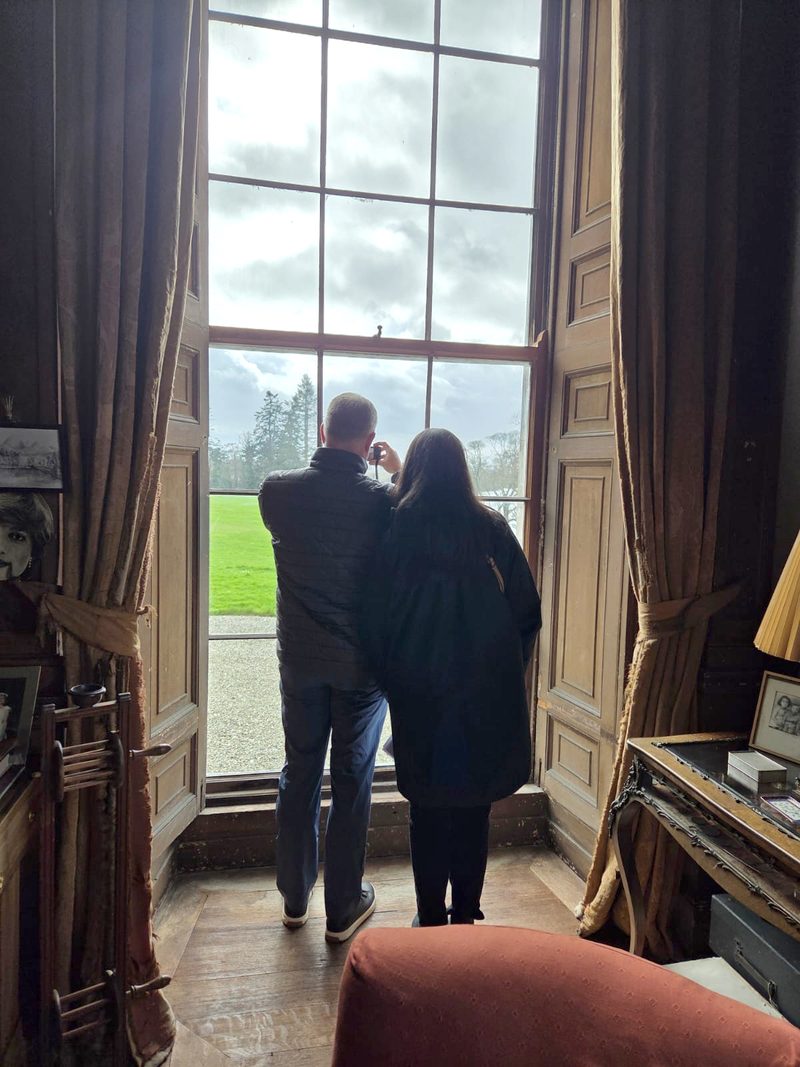
Lolly asked if she could take this one, us trying to recreate Papa’s photograph above. I’m glad she thought of it, because it says so much. On the back, in his hand, to his parents: “Save this picture I want to tell you all about it one of these days.” He wrote that at the very start of a four-year stint in Europe, with no idea if he’d make it home. Sixty years later he did get to tell that story, to his children and grandchildren.
It was in this same room, one he may well have spent time in with other officers, that Lady Anthea and Finnian invited us to sit and swap photos: the ones Finnian had gathered for us, and the ones I’d brought of Papa’s. We ended up on the floor, spreading them out over the couches and ottomans. They offered us wine. Tina said no thank you, and meant it. They offered again; no thank you again. Third time, we said yes. I’m glad I let Tina take the lead on that one. I’d have said yes the first time around, but this turned out to be an Irish custom I didn’t know. It played out as it should have, and they could not have been more hospitable.
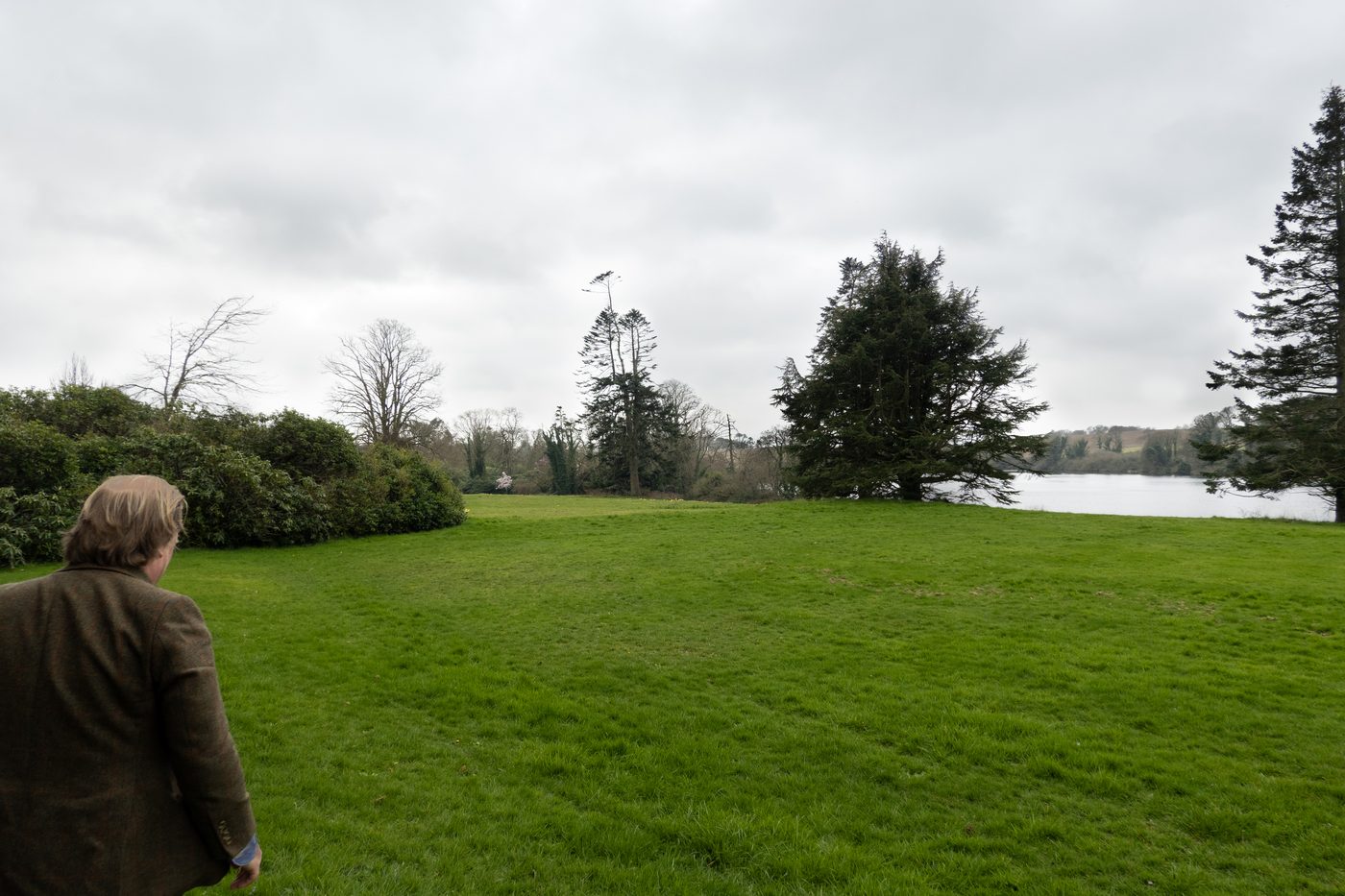
At that point, I hadn’t quite realized it, but I still didn’t actually have the photo. I had plenty of others, and if we’d left right then I’d have been satisfied. But when Finnian saw Papa’s photo of the house, he said, “I know right where this is. We have to go there.” I asked if it was far, figuring they’d already given us the whole property and I didn’t want to take up more of their time. “No,” he said, “it’s right over there.” I know the phrase “a little walkie” well enough from Tina’s other trips to Ireland, and this “right over there” turned out to be a good bit further than that: something like a thousand yards out, in a field on the opposite side of the property from everywhere we’d already been.
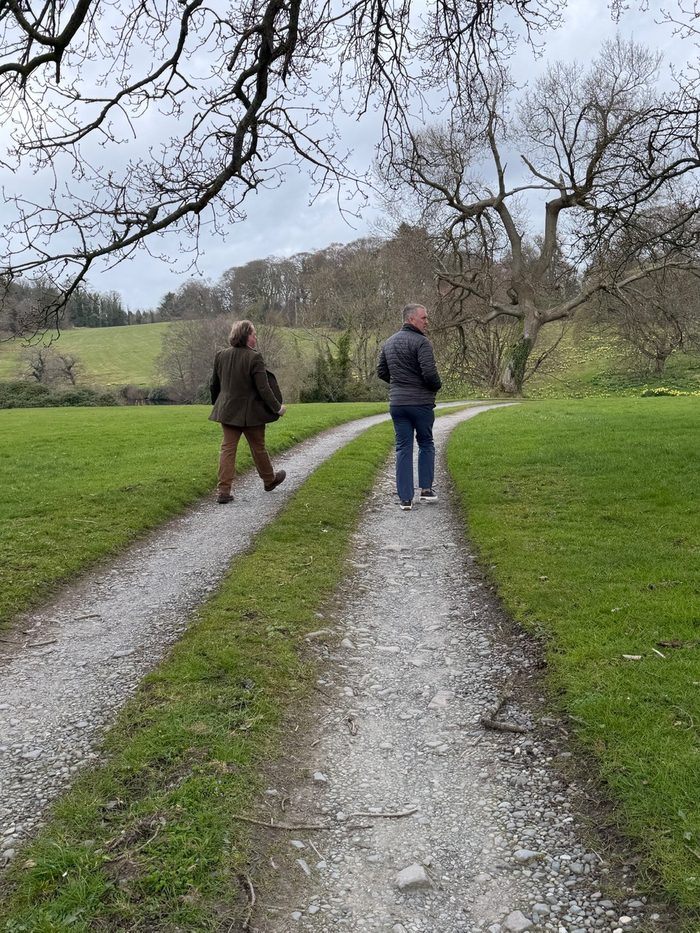
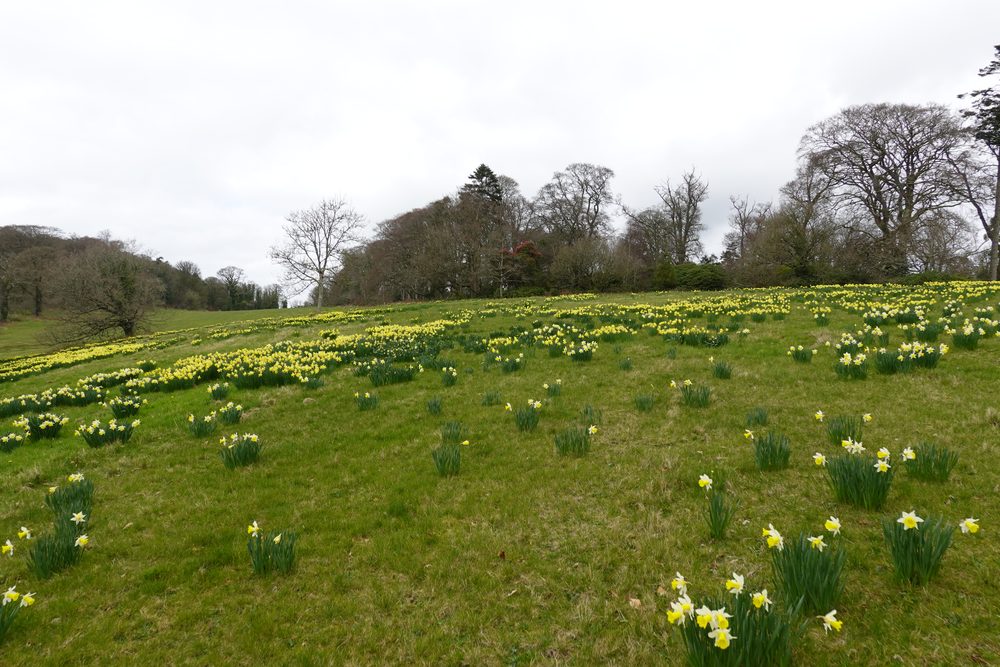
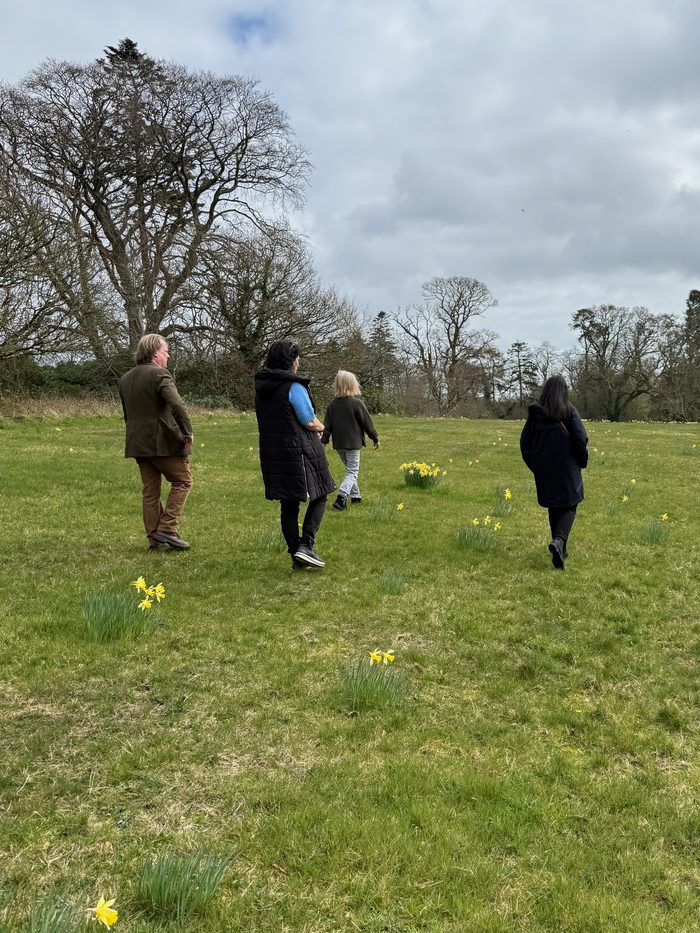
So we set out to find it. Huge fields of daffodils stretch across this part of the property, on and on. We’d gotten lucky with weather, and this was genuinely a nice walk to close out the day. And here it was. The photo at the top of this post, the one that got this whole day started, comes from these two: Papa’s, and mine.
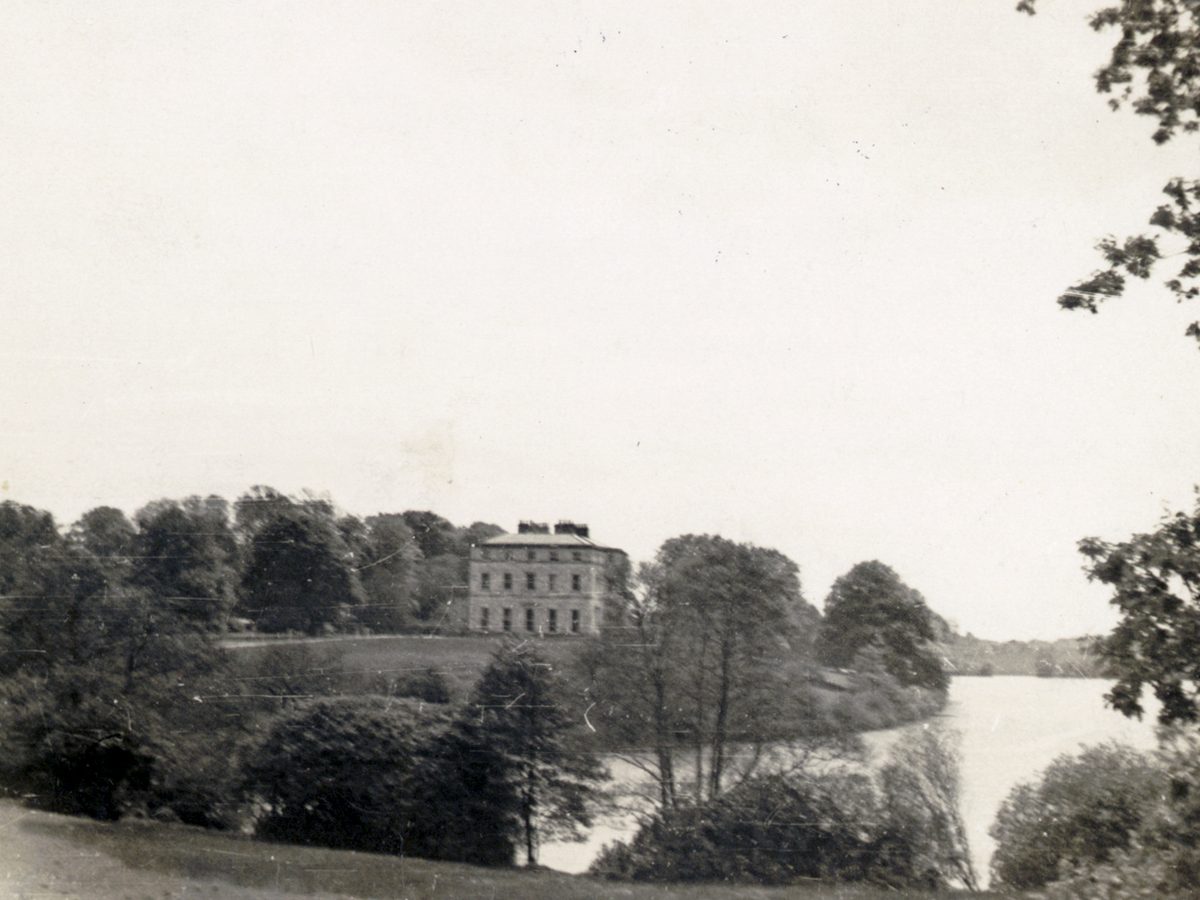
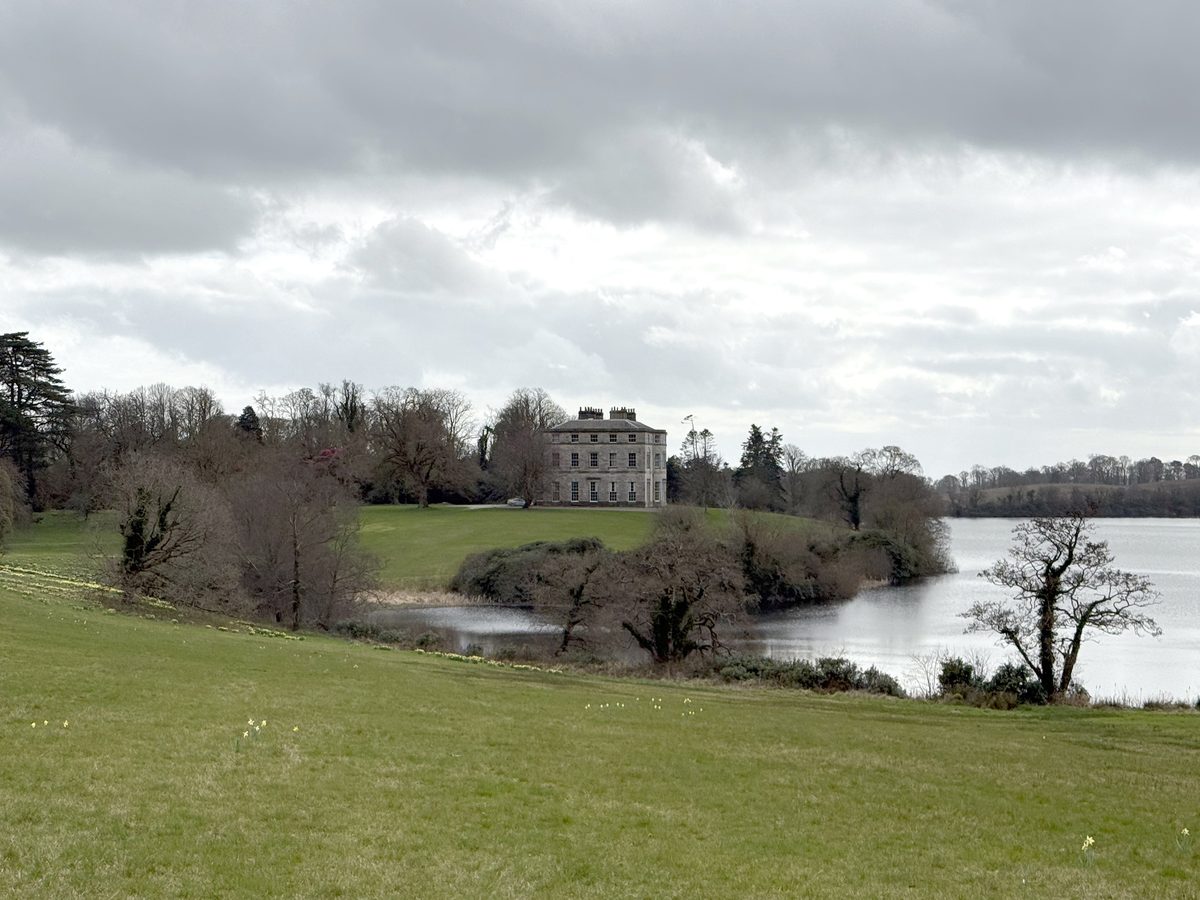
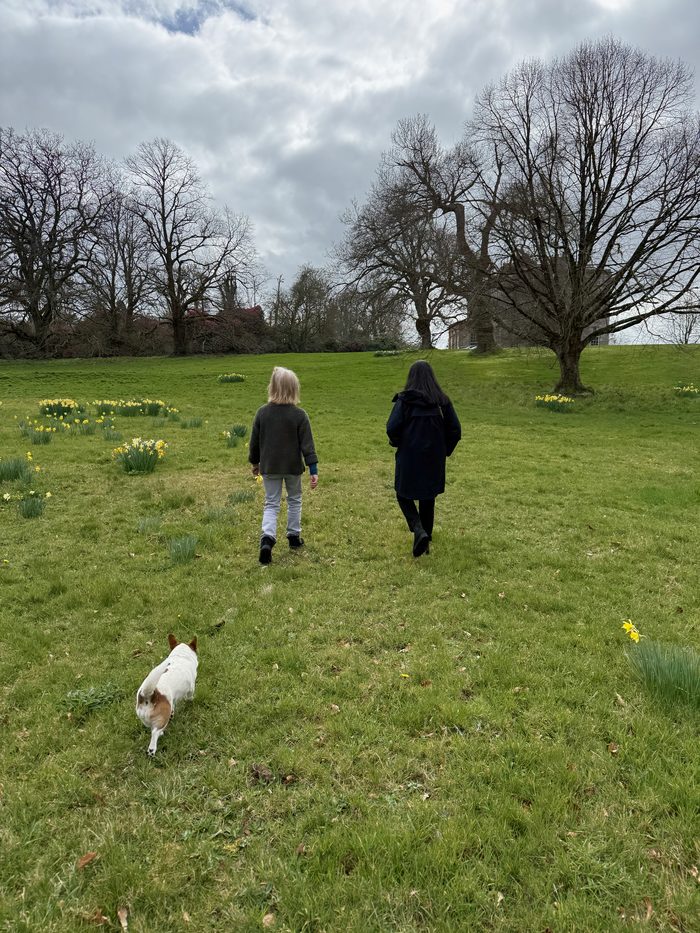
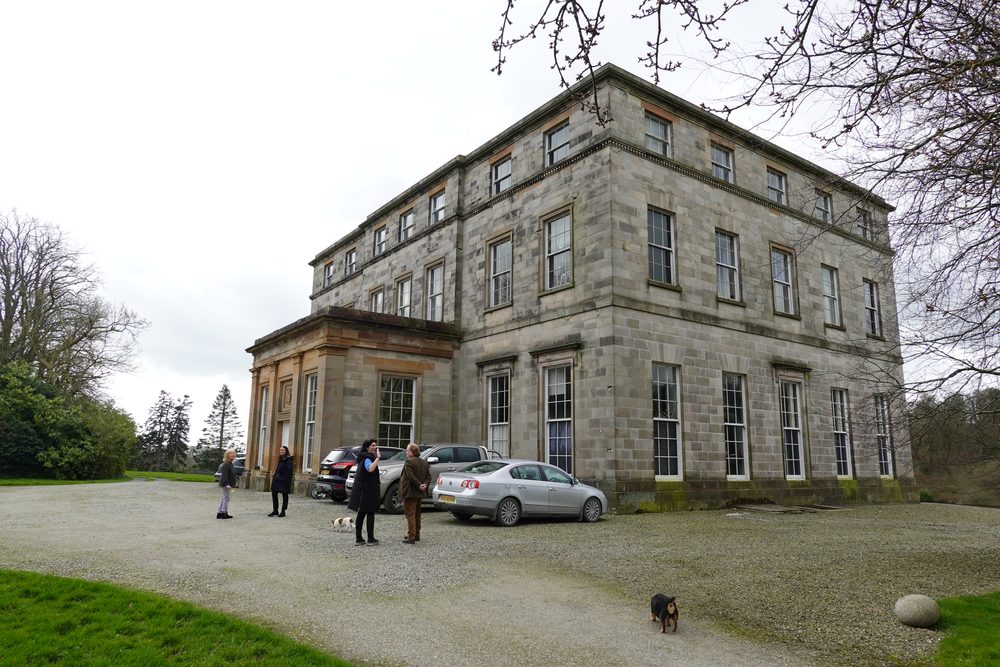
We made our way back to the house, ready to head off and see more of Northern Ireland. On the way, Tina got to spend some time talking with Lady Anthea, whose little dog had followed us the whole way out to the field and back. I think he was glad for the walk.
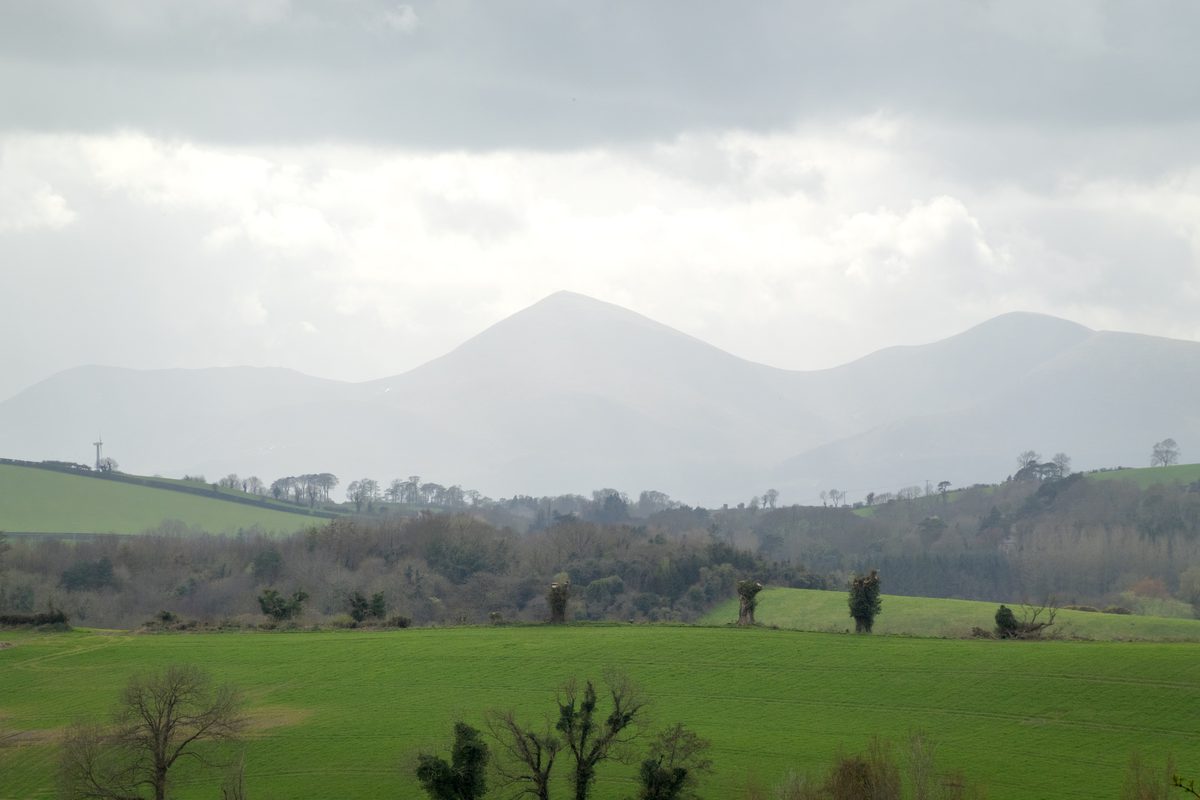
On the way out, Lolly stopped so we could get a photo of the Mourne Mountains and Slieve Donard. I keep coming back to my grandfather up on that peak with his friend Ricks and the two girls they’d met, how happy and excited he looks in that photo, with no idea yet of the adventure, and the hell, he was about to go through. He made it back, though, and as you can hear in the recording, he spoke fondly of his time here despite all of it. I felt a little bad for Lolly by the end. She had so much more to show us in Northern Ireland than we had time for, and we had to skip a lot of it. Every time she pointed out something we had to pass by, we’d just say, “next time we’re here.” We’ll definitely be back.